Menu

PCOS & Somatic Awareness
Key Takeaways
- Beyond Surface-Level Management: While nutrition, supplements, and routine tracking are helpful for PCOS, they often address only the physical symptoms without accounting for the underlying nervous system patterns of chronic stress.
- The Role of Somatic Awareness: Practices like Hakomi shift the focus from ‘fixing’ the body to listening to it, viewing symptoms not as failures, but as meaningful messages regarding the body’s history and emotional state.
- Hormonal Health and the Nervous System: Chronic stress and elevated cortisol levels significantly impact the HPA and HPO axes, making nervous system regulation a critical, often overlooked component of managing PCOS.
- Mind-Body Integration: Moving from a mindset of combat to one of curiosity and unity allows for a safer internal environment, which is essential for settling the nervous system and promoting true, sustainable hormonal balance.
Somatic awareness and PCOS
I started with a nutritionist, then supplements, then cycle tracking, regular blood tests, a stricter exercise routine, and a long list of changes that were meant to bring my body back into line to improve my metabolic health. I swapped spin for pilates. I tried seed cycling. I changed what I ate at different points in my cycle, specifically trying to manage insulin resistance. I watched my basal body temperature. I cut down alcohol, reduced caffeine, stopped doom scrolling, meditated more, and lost weight. I thought I had done everything right.
I hadn’t.
For a long time, I believed that if I controlled enough of the outside world, my hormones would settle down. Instead, I kept getting the same message from my body, indicating that chronic inflammation was being ignored. The turning point came when I found Hakomi and began to understand somatic practices. That is when somatic awareness started to make sense to me, not as a vague wellness idea, but as a way of listening to what my body had been carrying all along.
All of my careful tracking and lifestyle changes were useful, but they only reached the surface. My body held a story I had not yet learned to read. Underneath the charts, the supplements, and the routines, there was stress that had settled in over time, along with emotional patterns I had never properly dealt with. My nervous system had spent so long bracing itself that calm felt unfamiliar.
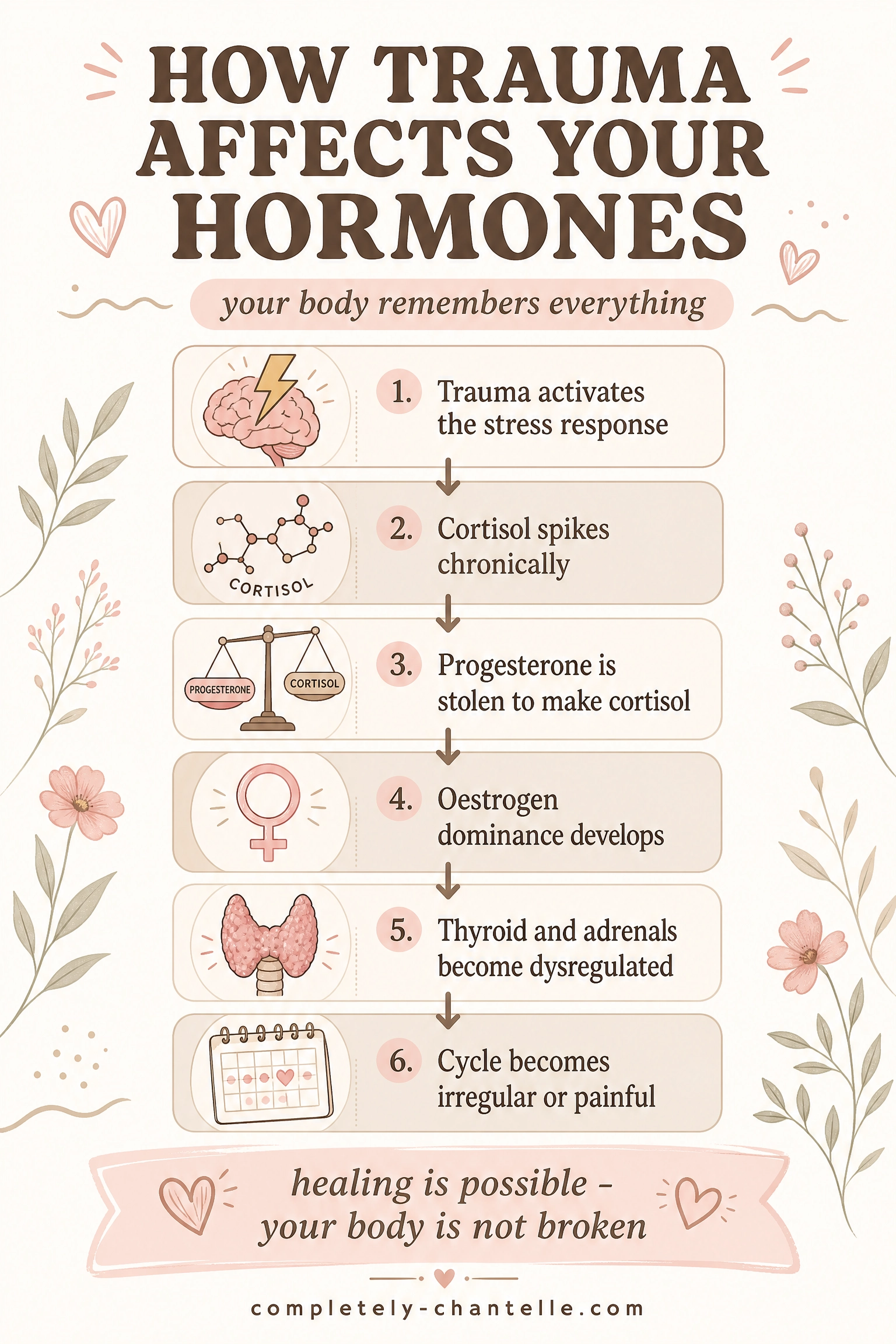
I learned about the HPA axis and the HPO axis, and how elevated cortisol levels from constant stress can keep the body on alert. My nervous system was feeling the weight of smaller stresses, old feelings, and had learned to stay ready for trouble. That pressure affected my hormonal health, as the constant stress response became the primary driver behind my need for nervous system regulation. It also worsened my PCOS.
I could see it more clearly when I noticed how often I pushed myself past what I needed. I made room for discipline, but not always for joy. I forgot how much my body needed softness, pleasure, and rest. Over time, that mattered. My system was focused on survival, not balance, and no amount of seed cycling could override that.

What Hakomi changed for me
Hakomi brought me back to mindfulness and non-violence. I stopped treating my body like a problem to solve and began meeting it with curiosity, which helped me slowly dismantle years of body image concerns. That shift changed everything. I no longer saw my symptoms as failures. I started to see them as messages.
The principle of organicity made this feel possible. My body already had its own intelligence. It did not need me to bully it into healing or force it into suppressing excess androgens through sheer willpower. It needed me to pay attention and trust that something meaningful was happening beneath the surface.
I began to notice how thoughts and memories showed up in my body. A hard memory would land in my jaw. Anxiety would tighten my chest. Grief would sit low in my stomach. I had woken in the night with dread for as long as I could remember, and now I could see that pattern with more honesty. These sensations were not random. They were part of my body’s language.
Through small, gentle somatic exercises, I started paying closer attention to what happened when I brought awareness to a feeling, a memory, or a belief. Sometimes I could feel my shoulders lift. Sometimes my breathing changed, signaling the activation of my vagus nerve and a welcome shift toward increased parasympathetic activity. Sometimes a part of me wanted to disappear altogether. That was useful information. It showed me where my system was holding on, and where it was asking for something different.
The mind-body connection
Somatic practices gave me a way to speak with my body without forcing it. I learned to track sensations and stay with them long enough to understand what they were saying. That was when pcos and somatic awareness became the foundation of true mind-body holism for me. My thoughts, emotions, posture, breath, and physical symptoms were never separate. They were all talking to each other.
That understanding changed how I looked at my condition. My body was not betraying me; it was protecting me in the only way it knew how while navigating this complex endocrine disorder. Once I saw that, I could stop fighting it. I could start listening.
The principle of unity made that even clearer. Parts of me that once felt split apart, including my anxious mind, my tired body, and my hurt heart, began to feel less isolated. I did not need to silence any of them. I needed to bring them into the same room, acknowledging that achieving this unity is a vital part of managing mental health conditions that often accompany a chronic diagnosis.
When I created a safer inner space, my nervous system had a chance to settle. I could offer myself the missing experiences my body had needed for years, such as safety, attunement, and a sense that I was allowed to rest. This was essential for addressing the stress patterns often linked to adrenal pcos and helped me find a sustainable path toward healing my hormonal imbalance.
This journey has changed how I work with clients too. I still think tracking, food choices, sleep, movement, and blood tests matter. They do. However, they are only part of the picture. Without somatic awareness, it is easy to miss the deeper patterns the body is carrying.
There is no single fix for hormonal health. Each body has its own history, its own language, and its own pace. Now, I help people step out of the war with their bodies and begin again with curiosity. Whether we are working to regulate irregular cycles, improve pelvic floor health, or navigate the broader challenges of an endocrine disorder, we look at the mind and body together, because they are always in conversation.
Frequently Asked Questions
Can somatic awareness actually improve PCOS symptoms?
Somatic awareness focuses on regulating the nervous system and lowering chronic stress levels, which are direct contributors to hormonal imbalances. By reducing the stress response, you create a more stable environment for your endocrine system to function, which can support the management of PCOS symptoms.
Is it necessary to stop tracking my cycles or changing my diet?
No, external tools like nutrition and cycle tracking remain important components of a holistic health approach. The goal of somatic awareness is to complement these tools rather than replace them, ensuring that you aren’t just managing the biology of the condition while ignoring the emotional and nervous system patterns underneath.
How do I know if my nervous system is stuck in a stress response?
You might notice feelings of constant dread, an inability to relax even during downtime, or physical sensations like tightness in the chest or jaw when thinking about your health. If you feel like you are constantly ‘bracing’ yourself or pushing through exhaustion, your system may be operating in a survival state rather than one of balance.
What is the difference between mindfulness and somatic awareness?
While mindfulness often involves observing thoughts and feelings from a distance, somatic awareness focuses specifically on tracking how those thoughts and feelings physically manifest in the body. It involves staying with physical sensations – like tension or breath changes – to understand the body’s unique language and needs.

Where I would start
As we honour PCOS awareness month, I invite you to explore a different way of relating to your body. I created The Embodiment Cycle Pack to help with this journey. It is a comprehensive guide to supporting your cycle through somatic practice, including somatic breathwork designed to help you navigate irregular cycles and the challenges of excess androgens.
It is for anyone who wants to stop working against their body and start working with it. Our bodies are intelligent; I had to learn that the hard way, and then I had to learn how to listen. Ultimately, learning to support your nervous system is a vital part of your unique experience with polycystic ovary syndrome.

Hormonal Health: Signs you have a Hormonal Imbalance
The Ultimate Guide to Eating and Moving for Your Specific Cycle Phase
Somatic Wisdom vs. The 20-Step Routine
The Luteal Phase: Why do I feel like a different person every three weeks?
Energy Crashes: Understanding Your Body’s Signals
Cycle Syncing: Exercising for Your Cycle to Beat PMS Symptoms
4 Types of PCOS Explained, Symptoms and Causes
How to Support Yourself During the Luteal Phase
Hormonal Health Basics for Women: A Guide
Hormonal Wellbeing: Your Hormonal Happiness
Healthy Habits and Your Hormones: How your everyday habits affect your cycle
Why building Somatic Awareness helps your menstrual cycle
Why Your Nervous System Holds the Key to Hormonal Balance
The Luteal Phase: “I know all this but I can’t move”
An ode to ‘feeling wrecked’ right now
Your Hormones aren’t betraying you
Trauma and Your Hormones: Understanding the Silent Connection
Body Literacy: Let’s stop chasing the ‘perfect’ cycle
The Hormone Powerhouse: A love letter to my liver
My Hormones + Hakomi: The 5 simple principles of Hakomi that overhauled my PCOS
From PCOS to PMOS: A Journey in Understanding my Hormonal Health
Data vs. Soul: What My Toxic Hormone Coach Taught Me About Sovereignty

