Menu
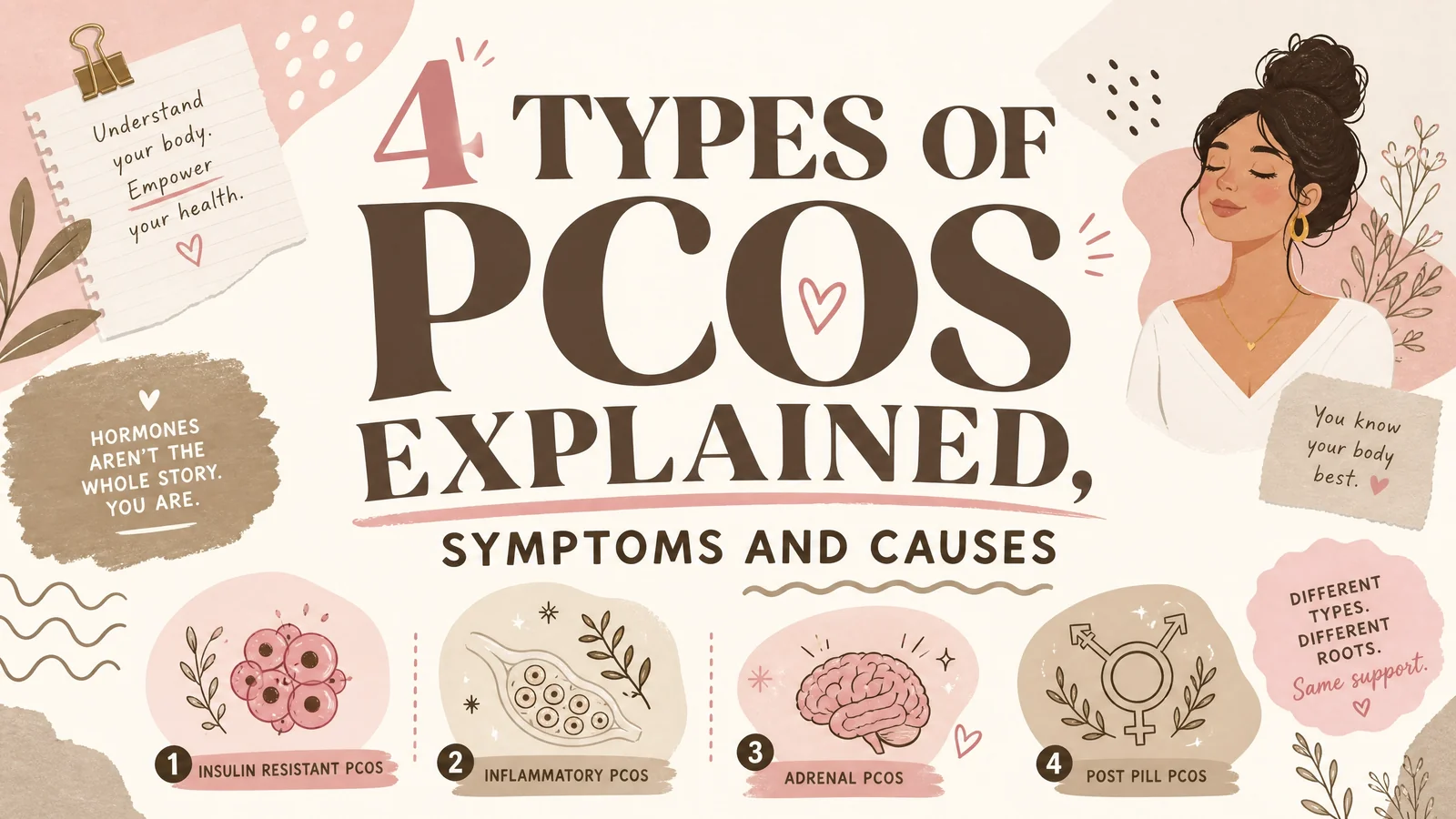
A guide to PCOS: The 4 Types
PCOS symptoms can look different from one person to the next, which is why the same condition can bring on irregular periods, acne, weight gain, or fertility issues in different ways.
The 4 types of PCOS are grouped by common hormone patterns, and that breakdown can help you make sense of what is going on during your reproductive years without treating it like a clinical diagnosis. A doctor can confirm polycystic ovary syndrome with testing, since symptoms alone do not tell the full story.
If you have been trying to connect the dots between your cycle, skin, weight, and labs, the four types are a useful place to start, so let us go through them clearly.
Key Takeaways
- PCOS is a diverse hormone and metabolic condition that manifests differently in every person, making it vital to view it as a collection of patterns rather than a single, identical disease.
- The four common PCOS patterns – insulin-resistant, inflammatory, adrenal, and post-pill – serve as helpful frameworks for understanding the potential drivers behind symptoms like irregular periods, acne, and weight changes.
- Symptoms alone provide important clues, but a formal clinical diagnosis requires professional medical testing, including blood work and evaluations of cycle history.
- Regardless of the specific PCOS pattern, focusing on steady blood sugar, balanced nutrition, consistent movement, nervous system and improved sleep quality serves as a foundational approach to managing symptoms and long-term health risks.
What PCOS is, and why the 4 types matter
Polycystic ovary syndrome, or PCOS, is a hormone and metabolic condition that can affect the ovaries, periods, skin, weight, and ovulation. It often shows up differently from one person to the next, which is why two people can both have PCOS and still deal with very different symptoms.
The 4 types of PCOS are not separate diseases. They are patterns doctors use to describe what may be driving the condition, such as insulin resistance, inflammation, or higher adrenal androgens. That matters because the pattern can shape PCOS symptoms, treatment choices, and long-term health risks, including fertility problems, type 2 diabetes, and heart disease.
The core PCOS symptoms people usually notice first
The first PCOS symptoms often show up in the menstrual cycle. Periods may come late, skip months, or stop for a while. Ovulation can also become less regular, which can make it harder to predict cycles or get pregnant.
Skin and hair changes are common too. Acne may flare up, especially around the jawline or chin. Some people notice extra facial or body hair, also known as hirsutism, which is a form of excessive hair growth, while others see thinning hair on the scalp.
Weight changes can happen as well. Some people gain weight more easily, while others notice shifts in appetite, energy, or body composition. These issues can feel disconnected at first, but they often point back to the same hormonal imbalance.
Common signs include:
- Irregular or missed periods
- Trouble with ovulation
- Acne
- Hirsutism or excessive hair growth
- Thinning hair on the scalp
- Weight gain or weight changes

PCOS does not always look dramatic. In some cases, the signs are subtle and easy to brush off. Still, if your cycle, skin, hair, and weight seem to change together, it is worth paying attention.
Doctors usually group PCOS by the hormone patterns and triggers they see in testing and symptoms. One pattern is linked to insulin resistance, where the body has a harder time using insulin well. Another is tied to inflammation, which can affect hormones and how the body responds.
A third pattern involves higher adrenal androgens, meaning the adrenal glands may be making more male-type hormones than expected. Some people also have PCOS linked more strongly to ovarian hormone imbalance or a history of irregular ovulation.
These patterns often overlap. You can have insulin resistance and inflammation at the same time, or a mix of adrenal and ovarian hormone issues. That is one reason PCOS can look so different from person to person.
The type matters because it can point to the most useful treatment path, not just the diagnosis itself.
When doctors understand the pattern behind your symptoms, they can choose a plan that fits better. That may affect what gets checked, how symptoms are managed, and what long-term risks need more attention.
The 4 types of PCOS explained in simple terms
PCOS does not follow one single pattern. That is why two people can both have the condition and still deal with very different symptoms, lab results, and day-to-day struggles.
The four common PCOS types are usually described by what seems to drive the hormone imbalance. Some people have a stronger metabolic pattern, while others show more stress-related or inflammation-related signs. Understanding which pattern fits best can make the symptoms feel less random and help point to the next useful step.
PCOS types are patterns, not separate diseases. A person can have more than one pattern at the same time.
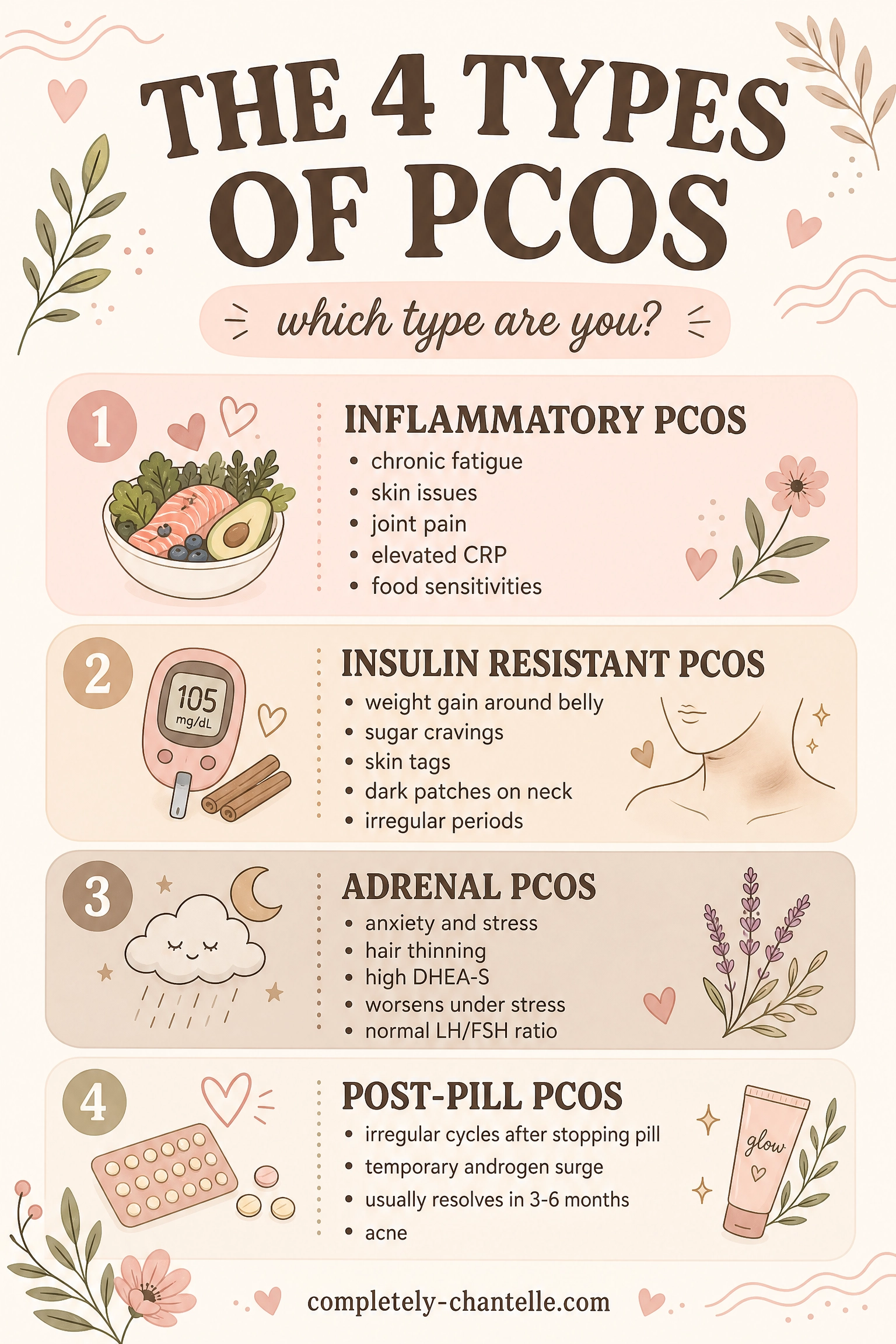
Insulin-resistant PCOS
This is the most common type of PCOS. In this form, the body struggles with insulin resistance, so the pancreas makes more of it to keep blood sugar under control. Over time, those higher insulin levels can push the ovaries to make more androgens, which can interfere with ovulation.
That hormone shift often shows up in very familiar ways. Because insulin resistance is the primary driver, you may notice sugar cravings, a heavy crash after meals, belly weight gain, acne, or irregular periods. Many people also say they feel tired after eating and struggle to lose weight even when they are trying hard.
Common signs include:
- Sugar cravings
- Belly weight gain
- Fatigue after meals
- Irregular periods
- Acne
- Trouble losing weight
Inflammatory PCOS
Inflammatory PCOS is linked with long-term, low-grade inflammation in the body. That inflammation can interfere with hormone signaling, which may disrupt ovulation and make cycles less predictable. It can also make symptoms feel more reactive, especially when stress or poor sleep pile up.
People with this pattern often notice bloating, headaches, skin issues like acne, food sensitivities, or a general drained feeling that does not seem tied to one obvious cause. Symptoms may flare after a stressful week or a stretch of bad sleep, which can make the pattern feel inconsistent even when it follows a clear trigger.
A few clues that point in this direction are:
- Bloating or digestive discomfort
- Headaches
- Skin irritation, acne, or breakouts
- Food sensitivities
- Fatigue
- Symptoms that worsen with stress or poor sleep
Inflammation does not replace the other PCOS drivers, but it can sit on top of them and make them worse. As a result, the cycle may become harder to predict.
Adrenal PCOS
Adrenal PCOS is driven more by stress hormones from the adrenal glands than by the ovaries. In this pattern, DHEA-S may run higher, causing increased androgen levels that affect acne, hair loss, and cycle regularity. Periods can still be irregular, even when the ovarian side of the picture looks different.
This type often comes with a stress-heavy symptom pattern. Anxiety, sleep problems, and breakouts along the jawline or chin are common complaints. Some people also notice extra shedding or thinning hair, and they may struggle with cystic acne during busy or emotionally loaded periods.
Stress does not cause all PCOS, and it is not the whole story for every person. Still, it can play a real role in this pattern, especially when symptoms seem to flare during intense work periods, poor sleep, or emotional strain. The adrenal glands respond fast to stress, which can nudge male hormones in the wrong direction and make your cycle less consistent.
When stress, sleep loss, and cycle changes appear together, adrenal PCOS becomes a pattern worth discussing with a clinician.
Post-pill PCOS
Some people notice PCOS-like symptoms after stopping oral contraceptives, especially if the medication had been masking signs that were already there. Once hormonal birth control is stopped, the body needs time to find its own rhythm again. For some, that reset period is temporary. For others, it reveals a hormone pattern that was always underneath.
Common signs include delayed periods, acne, and cycle changes in the months after stopping the pill. Ovulation may take time to return, so periods can be irregular while the body recalibrates. That can feel frustrating, especially if your cycle was predictable on the pill and suddenly becomes hard to track.
A simple way to think about it is this: oral contraceptives can cover up symptoms, but they do not always remove the underlying issue. If irregular cycles, acne, or other symptoms continue, a clinician should check for PCOS or another hormone condition.
How these types can overlap
These PCOS patterns do not always stay in separate boxes. Someone can have insulin resistance and inflammation, or stress-related symptoms layered on top of a metabolic issue. That overlap is one reason the condition can feel so confusing at first.
Even so, spotting the strongest pattern can help you pay attention to the right clues. If your biggest issues are cravings, fatigue after meals, and weight gain, insulin may be part of the story. If stress, sleep, and jawline breakouts dominate, the picture may point more toward adrenal or inflammatory PCOS.
How to tell which PCOS type you may have
You can often spot a likely PCOS pattern by looking at your strongest symptoms first. Cravings, weight changes, stress, sleep, and the timing of your symptoms all matter, because each pattern tends to leave a different trail.
Still, symptoms alone don’t confirm the type. They can point you in the right direction, but testing and a medical review are what make the picture clearer.
Symptoms that point to one pattern over another
Certain clues show up again and again. If food cravings, belly weight gain, and a crash after meals are part of your daily story, insulin resistance is often the first pattern to look at. That pattern usually comes with periods that are irregular, acne, oily skin, and trouble losing weight even with effort. It is also important to address this early, as untreated insulin resistance can eventually lead to type 2 diabetes.
Inflammatory PCOS can feel different. Fatigue, bloating, headaches, skin flare-ups, and food sensitivities often show up together. Many people also notice that symptoms get worse during stressful weeks or after poor sleep.
Adrenal PCOS often looks more stress-linked. If you deal with anxiety, wired-but-tired feelings, sleep problems, and jawline breakouts, that pattern may fit better. Some people also notice more hair shedding during busy or emotionally heavy periods.
Post-pill PCOS has a different timeline. Symptoms often start after stopping hormonal birth control, especially when periods stay irregular, acne returns, or ovulation doesn’t seem to restart on its own. A short adjustment period after birth control is common, but symptoms that keep going deserve a closer look.
A quick side-by-side view can help you sort the clues:
| Pattern | Common clues |
|---|---|
| Insulin-resistant PCOS | Sugar cravings, belly weight gain, fatigue after meals, acne, oily skin |
| Inflammatory PCOS | Bloating, headaches, skin issues, food sensitivities, low energy |
| Adrenal PCOS | Stress, anxiety, sleep issues, jawline acne, hair shedding |
| Post-pill PCOS | Symptoms after stopping birth control, delayed periods, acne, irregular ovulation |
A symptom pattern can point to the next step, but it can’t replace testing.
Tests and lab work that can help
A doctor may order labs to see what is driving your symptoms. Fasting insulin, fasting glucose, and A1C can help show whether insulin resistance is part of the picture. Testing androgen levels can also matter, since higher testosterone can explain acne, hair thinning, or extra hair growth.
Other labs often include DHEA-S, which can help check for adrenal involvement, and thyroid tests, since thyroid problems can mimic PCOS symptoms. In some cases, inflammation markers may also be checked, especially if fatigue, bloating, or skin flare-ups are part of the story.
A vaginal ultrasound may help, but it does not tell the whole story. While it can identify ovarian cysts, some people have PCOS symptoms without clear ultrasound changes, and others have cysts without classic PCOS. That is why doctors use symptoms, labs, cycle history, and exam findings together.
What usually helps, no matter the type
Even though the 4 types of PCOS can look different, a few support strategies show up again and again. The goal is not to force one fix on every body. It is to support the parts of the system that most often affect cycles, energy, skin, and ovulation. By managing these symptoms early, you can also lower your long-term risks for health conditions like high blood pressure, heart disease, and endometrial cancer.
That usually means keeping blood sugar steadier, lowering stress where you can, and choosing habits you can actually keep. Some people respond best to food changes first. Others need medical care in the mix, especially when symptoms are severe or when dealing with infertility caused by irregular cycles.

Food and daily habits that can support hormone balance
Balanced meals matter because they help your body avoid big blood sugar swings. That often starts with enough protein, fiber, and healthy fats at each meal, along with slower-digesting carbs like beans, vegetables, fruit, and whole grains. Skipping meals or relying on quick snacks can leave you on a roller coaster, especially if insulin resistance is part of the picture.
Implementing consistent lifestyle changes can help you maintain a steady rhythm, which keeps energy and cravings more predictable. Gentle movement also helps, and it does not have to be intense. Walking, strength training, yoga, and light cardio can all support insulin sensitivity and overall hormone health.
Sleep matters just as much. A consistent bedtime, less screen time late at night, and enough rest can help your body handle stress better. For many people with PCOS, better sleep and better blood sugar control go hand in hand. The NIH review on lifestyle management in PCOS explains why diet, movement, and behavior changes are first-line care in many guidelines.
> Different PCOS patterns may respond to different strategies, but most people benefit from blood sugar support and lower stress.
A few basics are a good place to start:
- Build balanced plates with protein, fiber, and slow carbs.
- Move most days, even if it is just a brisk walk.
- Protect sleep with a regular routine.
- Reduce stress where possible, since chronic stress can make symptoms harder to manage.
Frequently Asked Questions
Can I have more than one type of PCOS?
Yes, it is common for these patterns to overlap. You may experience symptoms related to both insulin resistance and inflammation simultaneously, or find that stress-related adrenal issues exacerbate other existing hormonal imbalances.
Do I need a doctor to tell me which type of PCOS I have?
While observing your symptoms can give you helpful insights, only a healthcare professional can confirm a diagnosis through specific lab tests, such as fasting insulin, glucose, or androgen levels. Relying on testing ensures that other conditions, like thyroid issues, are not being mistaken for or masking your PCOS symptoms.
Is PCOS curable or is it a lifelong condition?
There is no known cure for PCOS, but it is a manageable condition. By identifying your specific pattern and adopting consistent lifestyle habits or medical treatments, you can significantly reduce symptoms and lower your long-term risks for health complications like type 2 diabetes and heart disease.
Why do my PCOS symptoms change when I am stressed?
Stress triggers your adrenal glands, which can increase androgen production and disrupt your overall hormonal balance. This is particularly common in adrenal PCOS, where emotional strain or poor sleep often leads to flare-ups in acne, hair thinning, and menstrual irregularities. Nervous system and somatic work can be the missing link here.
A final note
PCOS can show up in different ways, which is why the 4 types of PCOS are a useful guide instead of a strict label. The pattern behind your PCOS symptoms can point to what needs attention most, whether that is insulin resistance, inflammation, stress-related hormone shifts, or a post-pill change.
If your cycle, skin, hair, weight, or energy have changed in a pattern that feels familiar, pay attention to that pattern and get testing if needed. A healthcare provider can help connect these symptoms with lab work, build a plan that fits your body, and address concerns like infertility to support your long-term reproductive health.
The clearest next step is to treat PCOS as a condition that can be understood, then managed with the right support. My PCOS Programme is a great place to start!
Hormonal Health: Signs you have a Hormonal Imbalance
The Ultimate Guide to Eating and Moving for Your Specific Cycle Phase
Somatic Wisdom vs. The 20-Step Routine
The Luteal Phase: Why do I feel like a different person every three weeks?
Energy Crashes: Understanding Your Body’s Signals
Cycle Syncing: Exercising for Your Cycle to Beat PMS Symptoms
4 Types of PCOS Explained, Symptoms and Causes
How to Support Yourself During the Luteal Phase
Hormonal Health Basics for Women: A Guide
Hormonal Wellbeing: Your Hormonal Happiness
Healthy Habits and Your Hormones: How your everyday habits affect your cycle
Why building Somatic Awareness helps your menstrual cycle
Why Your Nervous System Holds the Key to Hormonal Balance
The Luteal Phase: “I know all this but I can’t move”
An ode to ‘feeling wrecked’ right now
Your Hormones aren’t betraying you
Trauma and Your Hormones: Understanding the Silent Connection
Body Literacy: Let’s stop chasing the ‘perfect’ cycle
The Hormone Powerhouse: A love letter to my liver
My Hormones + Hakomi: The 5 simple principles of Hakomi that overhauled my PCOS
From PCOS to PMOS: A Journey in Understanding my Hormonal Health
Data vs. Soul: What My Toxic Hormone Coach Taught Me About Sovereignty

