Menu

Body Literacy vs. Perfection
Key Takeaways
- Prioritise Body literacy over perfection: True health is found in understanding your body’s unique signals and rhythms, rather than forcing your cycle into an unattainable, idealised pattern.
- Understand hormonal movement: Hormones are naturally dynamic, not static; cyclical fluctuations are an essential part of healthy function and should not be viewed as problems to be erased.
- Adopt a sustainable framework: Move away from restrictive wellness protocols that induce stress and shame, focusing instead on compassionate, supportive habits like nervous system regulation and cycle-informed rest. The foundations of body literacy!
- Value medical collaboration: Body literacy complements professional medical care; it is essential to seek formal diagnosis and treatment for conditions like PCOS while using self-knowledge to manage your day-to-day wellbeing.

Focus on Body Literacy, not perfection
When I first started trying to heal my PCOS, I became fixated on having the perfect period. Body literacy is essentially the ability to read and understand your own body’s signals, yet I was ignoring mine in favour of an idealised version of health. I wanted my menstrual cycle to arrive on time, stay symptom-free, cause no pain, and leave me feeling calm, capable, and balanced every month. I paid far too much attention to my luteal and menstrual phases, and I barely thought about ovulation, even though ovulation is the part that really matters.
I wanted my period back. I wanted it to be easy. I wanted my body to stop feeling like such a problem.
Then I found the wellness world, and a lot of the advice I came across fed that obsession. It also made me feel as though I was constantly falling short. That dragged up old eating disorder habits. I became obsessive about food, exercise, and sleep. I started treating rest like a task I had to pass. If I did not get my perfect eight hours, I felt like I had failed.
All of that fed the shame I already carried about a body that did not seem to work properly. So I built my own shame-free framework from different sources, and I use it with clients now. It is rooted in body literacy, which means learning to interpret those unique body signals instead of trying to force my system into a neat, pleasing pattern.
Most importantly, that approach helped me move from chronic PCOS to mild PCOS.
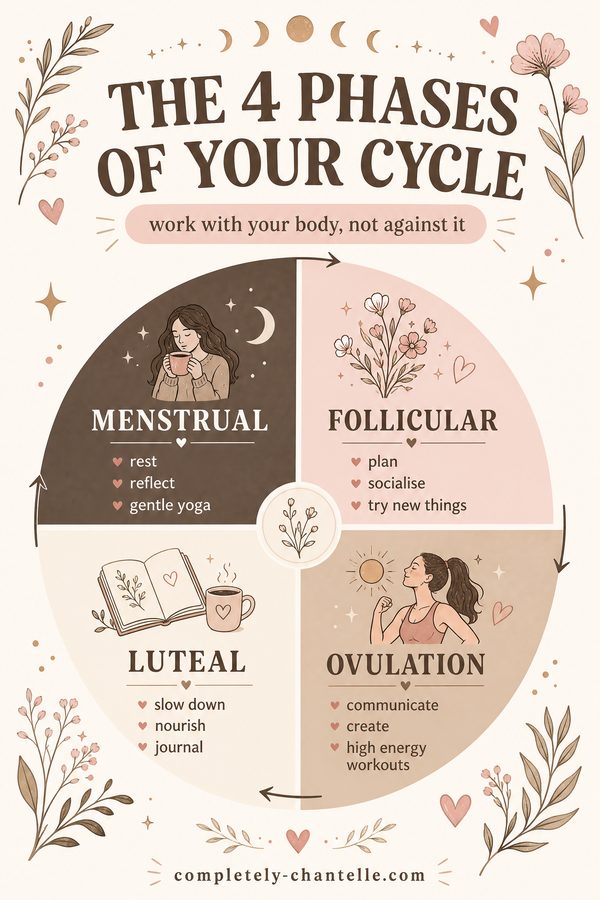
How our obsession with the ‘perfect cycle’ moves us away from body literacy
I understand why the idea of just balancing your hormones hooks people. It sounds simple. It sounds tidy. When life feels messy and your symptoms keep piling up, a single fix can feel very comforting.
The problem is that this message often turns a complex body into a basic checklist. Social media is full of supplements, protocols, and lifestyle rules that promise hormonal harmony, better skin, more energy, less bloating, easier cycles, and better moods. That can feel reassuring at first, especially if conventional healthcare has felt slow, dismissive, or fragmented. It is important to note that developing body literacy is a companion to medical care and informed consent; it is not a direct replacement for reproductive health support or hormonal contraception if that is what you choose.
For women in particular, this message lands hard. There is a long history of treating female bodies as unstable, overly emotional, or ruled by hormones in a way male bodies are not. As Norah MacKendrick has pointed out, female bodies are often seen as more hormonal than male bodies. That kind of thinking can feed pressure to be thinner, more controlled, and more useful, all while pretending to be about health.
So the promise of a perfect cycle becomes very seductive. It can make it feel as though control is just one supplement, one routine, or one meal plan away.
The menstrual cycle: Hormones are not meant to sit still
The endocrine system is incredibly complex. It includes many glands and organs, and it produces more than 50 hormones with different jobs. These hormones affect metabolism, growth, reproduction, mood, stress, and much more.
Hormones do not sit in a fixed state of balance. They rise and fall constantly, changing across the day, the month, and throughout different life stages. This movement is a vital part of how the body functions. In fact, the menstrual cycle is often referred to as the 5th vital sign, serving as a primary indicator of your overall health and wellbeing.
Dr Lindsey VanDyke, an endocrinologist, explains that claiming someone has a vague hormone imbalance means very little unless you can specifically name the hormone, the pathway, and the reason. A real conversation about these processes needs detail rather than vague promises.
A menstrual cycle includes natural shifts in oestrogen, progesterone, and testosterone. Those changes are not problems to erase; they are essential components of a healthy cycle. Tracking these shifts in hormone levels can act as important biomarkers for your health. Body Literacy helps me notice these body signals without treating every wobble as a crisis. Whether I am approaching ovulation or moving through the luteal phase, I have learned to view these fluctuations as normal.
There are, of course, real hormone conditions. Hypothyroidism and PCOS are diagnosable medical conditions with clear criteria and proper treatment pathways. They require testing, interpretation, and support from qualified medical professionals. They are certainly not fixed by generic hormone balancing plans.
The pressure to chase a perfect cycle does real damage
The more I chased an ideal cycle, the more anxious I became. That pressure can backfire fast. It can make symptoms feel worse because the stress response changes how the body behaves.
I also think it pushes people into unhealthy patterns around food, exercise, and rest. When every symptom becomes evidence that something is wrong, it is easy to lose trust in your own body. I did that for years.
That is why I no longer aim for perfection. I aim for understanding and deeper self-knowledge. I pay attention. I make adjustments. I stay honest about what is mine to change and what needs medical support.
What I do instead
I built a way of working that supports my body without punishing it. This is what I rely on now:
- I focus on the basics that actually help. I eat in a way that supports where I am in my cycle, I move my body in a way that fits that phase, and I use cycle tracking to better understand my body’s needs. I treat sleep and stress care as part of health, not as tests I have to ace. These habits help me make more healthy decisions throughout the month.
- I trust my own body first. My cycle has its own rhythms and patterns, and I want to understand what it is telling me rather than copy what wellness influencers say it should look like every month. If my body is different, that does not mean I have failed. Developing a consistent approach to cycle tracking allows me to see the bigger picture of my health.
- I use medical support when I need it. I have had blood tests, and I still have regular scans and check-ups for my PCOS. I can make real lifestyle changes, but I also know when to ask for help. If something needs diagnosing or treatment, I want proper medical care.
- I regulate my nervous system and use somatic work. This has been one of the biggest shifts for me. Havening, self-touch, deep breathing, and orienting help my system settle. I notice the difference in my mood, my stress levels, and my cycle. These tools are useful across the entire menstrual life cycle, providing essential support during periods of change like postpartum recovery.
- I accept that life affects my cycle. When I moved flat recently, my period arrived five days late. That made sense to me. My body had been under strain, so I gave myself more care as my body adjusted its rhythms and patterns. Some days felt messy and some felt fine, which is simply a part of being human.

What I keep coming back to
Human physiology is not neat, fixed, or identical from one person to the next. Health is not a perfect template. It is a process of paying attention, adjusting, and responding with honesty.
The “just balance your hormones” message sounds appealing, but it often strips away the real complexity of the body and ignores the root cause of our health concerns. In the process, it can damage our emotional literacy, making women feel as though they are failing if their cycle does not look ideal every month.
I want a different approach. I want one that respects science, makes room for the mess, and centres body literacy instead of control. Ultimately, it is this commitment to body literacy that allows us to move away from the pressure of perfection and toward a more sustainable relationship with our own health.
Frequently Asked Questions
What does ‘body literacy’ actually mean in practice?
Body literacy is the ability to read, interpret, and understand your own body’s signals and biological rhythms. In practice, it means tracking your cycle to notice patterns rather than trying to force your body to conform to a generic wellness standard.
Can I stop focusing on ‘balancing my hormones’?
While the concept is popular in the wellness world, the idea of a fixed state of hormonal ‘balance’ is often an oversimplification. Instead of chasing a perfect state, focus on tracking your unique biomarkers to understand your health, as hormones are meant to fluctuate throughout your life stages.
Is it normal for my cycle to change when I am stressed?
Yes, it is completely normal for life events, stress, or significant changes to impact your cycle. Your endocrine system is sensitive to external factors, and it is a sign of good body literacy to recognise these shifts as natural responses rather than personal failures.
Does this approach replace the need for a doctor?
Absolutely not. Body literacy is intended to be a partner to medical care, not a replacement. You should always seek formal diagnosis and evidence-based treatment from qualified healthcare professionals for specific conditions like PCOS or hypothyroidism.
Where you can start
If I wanted to come home to myself and work with my hormones instead of against them, I would start with support that helps me listen to my body. This journey often begins with fertility awareness, providing a foundation for understanding how our unique rhythms shift from month to month. It also involves prioritising medical advocacy, ensuring that I feel heard and empowered when navigating conversations about my health with professionals.
That is why I created Your Seasons Your Cycle guide to supporting your cycle through somatic practice. It includes practical tools for each phase of the menstrual cycle, using careful observation and learning to help me understand the different seasons my body moves through.
Our bodies are intelligent. We are taught to forget that, especially as women, but reclaiming this knowledge is the key to true body literacy.
Hormonal Health: Signs you have a Hormonal Imbalance
The Ultimate Guide to Eating and Moving for Your Specific Cycle Phase
Somatic Wisdom vs. The 20-Step Routine
The Luteal Phase: Why do I feel like a different person every three weeks?
Energy Crashes: Understanding Your Body’s Signals
Cycle Syncing: Exercising for Your Cycle to Beat PMS Symptoms
4 Types of PCOS Explained, Symptoms and Causes
How to Support Yourself During the Luteal Phase
Hormonal Health Basics for Women: A Guide
Hormonal Wellbeing: Your Hormonal Happiness
Healthy Habits and Your Hormones: How your everyday habits affect your cycle
Why building Somatic Awareness helps your menstrual cycle
Why Your Nervous System Holds the Key to Hormonal Balance
The Luteal Phase: “I know all this but I can’t move”
An ode to ‘feeling wrecked’ right now
Your Hormones aren’t betraying you
Trauma and Your Hormones: Understanding the Silent Connection
Body Literacy: Let’s stop chasing the ‘perfect’ cycle
The Hormone Powerhouse: A love letter to my liver
My Hormones + Hakomi: The 5 simple principles of Hakomi that overhauled my PCOS
From PCOS to PMOS: A Journey in Understanding my Hormonal Health
Data vs. Soul: What My Toxic Hormone Coach Taught Me About Sovereignty

