Menu

Listening to your Hormones
Key Takeaways
- Hormones and the nervous system are in a constant, bidirectional conversation; supporting your nervous system is a primary way to foster hormonal balance and resilience.
- Chronic stress keeps the nervous system in a sympathetic ‘fight or flight’ state, which prioritizes survival over reproductive health and can exacerbate physical symptoms.
- Your body’s metabolism and energy needs change throughout your cycle; providing adequate fuel and honoring your need for rest during the luteal and menstrual phases is vital for neurological health.
- Somatic practices, such as cycle tracking and gentle self-touch, engage the peripheral nervous system to send signals of safety to the brain and spinal cord, helping to regulate the body’s internal environment.

Your hormones are messengers
I believe hormones get blamed far too quickly. I have lost count of how many times I have heard, usually from men, “is it your time of the month?” whenever I had a feeling, a mood shift, or a strong emotional reaction.
Sometimes it was my period. Sometimes it was not. Either way, the response was lazy, rude, and far too dismissive. It reduced everything to “the hormones” as if that explained the whole picture.
What I see now, especially online, is women saying they only get two decent weeks each month, while the luteal and menstrual phases feel like misery. I understand that completely. I have been there too. But I also know those phases do not have to feel unbearable every single month.
There is so much that can support the body here, from nutrition and supplements to, most importantly, the nervous system. When progesterone and oestrogen drop in the late luteal phase, the body feels that shift. Progesterone is the “keep calm and carry on” hormone, and once ovulation is over, it starts to decline. At the same time, when oestrogen falls, the activity of neurotransmitters like serotonin can dip too. Lower levels of these chemicals are linked with anxiety, irritability, and low mood, which the brain processes as physical or emotional distress.
That is why I care so much about nervous system support. The central nervous system acts as an internal monitor for the body, and it has a direct influence on the endocrine system. These two systems are closely connected, and the brain relies on this communication to maintain balance. When that connection is working well, hormones tend to feel steadier and the body handles change with more ease.

The nervous system and hormones work together
I often explain the endocrine system and the autonomic nervous system as being in constant conversation. When these systems are balanced, they support each other, but when stress becomes chronic, that internal dialogue is disrupted.
Many of the women I work with exist in a long-term sympathetic nervous system state. In this mode, cortisol levels remain high and the body stays on high alert as survival takes priority. When the nervous system is focused entirely on navigating perceived threats, the body diverts energy away from reproduction and tissue repair, which can directly affect ovulation.
Communication between these systems relies on nerve cells that transmit information through the brainstem and spinal cord. When we experience the settling, soft feeling of oxytocin, we are essentially triggering the parasympathetic nervous system. This state helps the body feel safe, allowing us to notice our physical and emotional needs and respond with greater care. By consciously inviting this sense of safety, we send regulated signals through the brainstem and spinal cord to support endocrine function. This nervous system regulation promotes a more stable hormonal environment and improves our overall tolerance for the natural shifts that occur throughout the menstrual cycle.
This is one reason I emphasize somatic work. The nervous system must perceive safety at a deep, physiological level before the body can truly settle.
Food, movement, and rest matter more than people think
I also see many women eating the same number of calories every day of the month, regardless of where they are in their cycle. This static approach can make luteal and menstrual phases feel significantly more difficult.
During the luteal and menstrual phases, your metabolism rises. Your brain and spinal cord require steady energy levels to maintain stability during these times. When you consume the extra 300 calories your body often needs, you are providing the fuel necessary for the firing of neurons and the overall efficiency of their synapses. Furthermore, glial cells act as a vital support system for these nerve structures, ensuring they function correctly while serotonin levels fluctuate. This is precisely why cravings for sugar increase; your body is simply asking for the quick, physiological support required to maintain neurological health.
Exercise matters too. Many women continue to push through intense workouts even when their body is clearly asking for a different pace. I prefer to think of the luteal and menstrual phases as autumn and winter in the cycle. This is not the time for constant output; instead, it is a time for slowing down, turning inward, and allowing your nervous system the seasonal rest it requires. During these phases, prioritize resting, reflecting, and taking things more gently.
That shift is not weakness. It is body awareness.
Where I would start
I always begin with cycle tracking. If you know roughly where you are in a 28 to 35 day cycle, it becomes much easier to understand what your body is asking for and when. That awareness alone changes so much.
I also encourage safe self-touch across the month to soothe the peripheral nervous system. This can be very simple, like touching your face in the morning, stretching, or practicing havening. These small moments act as a way to engage sensory neurons and activate motor neurons. As these signals move through the axons within our nerve cells, they transmit messages of safety to the spinal cord and then to the brain. Because the peripheral nervous system extends into our limbs and skin, these tactile practices are essential for helping the entire nervous system settle and bring in more comfort and ease.
Over time, this process keeps the connection between our neurons and hormonal regulation stronger. The more I work with women, the more certain I become that the body is not working against us; it is speaking. When we listen, we stop treating every shift as a problem to fix and start responding to the signals of our nervous system with more skill.
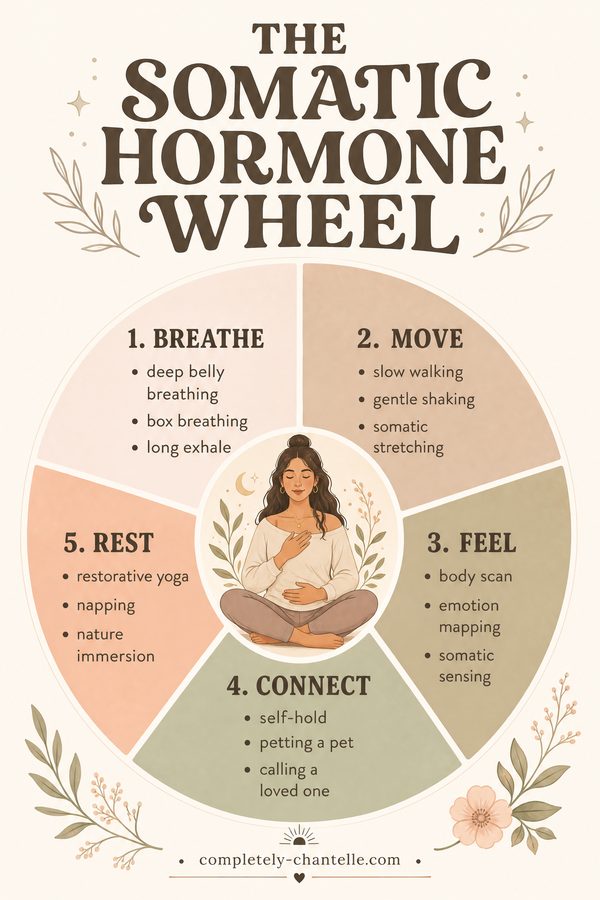
Pin this for later ⬇️
Frequently Asked Questions
Why does my mood shift so much during the luteal phase?
When progesterone and oestrogen levels drop after ovulation, the activity of neurotransmitters like serotonin can also decrease. This chemical shift is processed by the brain as distress, which may manifest as anxiety, irritability, or low mood as your nervous system reacts to these hormonal changes.
How does my nervous system affect my cycle?
The central nervous system acts as an internal monitor that influences the endocrine system. When you are in a state of chronic stress, your nervous system prioritizes survival over other functions, which can disrupt the delicate hormonal signals required for ovulation and reproductive balance.
Can what I eat help stabilise my mood during my cycle?
Yes, consuming adequate calories is essential because your metabolism rises during the luteal and menstrual phases. Providing your brain and spinal cord with enough energy supports the firing of neurons and the health of synapses, which helps maintain stability while your body navigates hormonal fluctuations.
What are some simple ways to support my nervous system daily?
You can soothe your peripheral nervous system through simple somatic practices like self-touch, intentional stretching, or ‘havening.’ These actions engage sensory neurons and send signals of safety through the nerves to your spinal cord and brain, helping you feel more regulated and grounded.
Coming back to yourself
True holistic health begins when we recognize that the central nervous system coordinates these internal shifts alongside the peripheral nervous system. By tapping into the autonomic nervous system, you can create a state of safety that signals your brain to find balance. This connection relies on the way your neurons communicate across the spinal cord to influence every function in your body.
When you learn to listen, you realize that your nervous system is the ultimate map for your well-being. As you start to pay attention to where you are, what your body needs, and how your central nervous system feels today, you invite your brain to regulate more effectively. This somatic awareness allows your neurons to process stress differently, proving that your nervous system is always working in your favor. If you start anywhere, start by honoring this complex nervous system, because that is where hormonal support becomes real, personal, and usable. By tending to your central nervous system, you are truly coming back to yourself.

Hormonal Health: Signs you have a Hormonal Imbalance
The Ultimate Guide to Eating and Moving for Your Specific Cycle Phase
Somatic Wisdom vs. The 20-Step Routine
The Luteal Phase: Why do I feel like a different person every three weeks?
Energy Crashes: Understanding Your Body’s Signals
Cycle Syncing: Exercising for Your Cycle to Beat PMS Symptoms
4 Types of PCOS Explained, Symptoms and Causes
How to Support Yourself During the Luteal Phase
Hormonal Health Basics for Women: A Guide
Hormonal Wellbeing: Your Hormonal Happiness
Healthy Habits and Your Hormones: How your everyday habits affect your cycle
Why building Somatic Awareness helps your menstrual cycle
Why Your Nervous System Holds the Key to Hormonal Balance
The Luteal Phase: “I know all this but I can’t move”
An ode to ‘feeling wrecked’ right now
Your Hormones aren’t betraying you
Trauma and Your Hormones: Understanding the Silent Connection
Body Literacy: Let’s stop chasing the ‘perfect’ cycle
The Hormone Powerhouse: A love letter to my liver
My Hormones + Hakomi: The 5 simple principles of Hakomi that overhauled my PCOS
From PCOS to PMOS: A Journey in Understanding my Hormonal Health
Data vs. Soul: What My Toxic Hormone Coach Taught Me About Sovereignty

