Menu
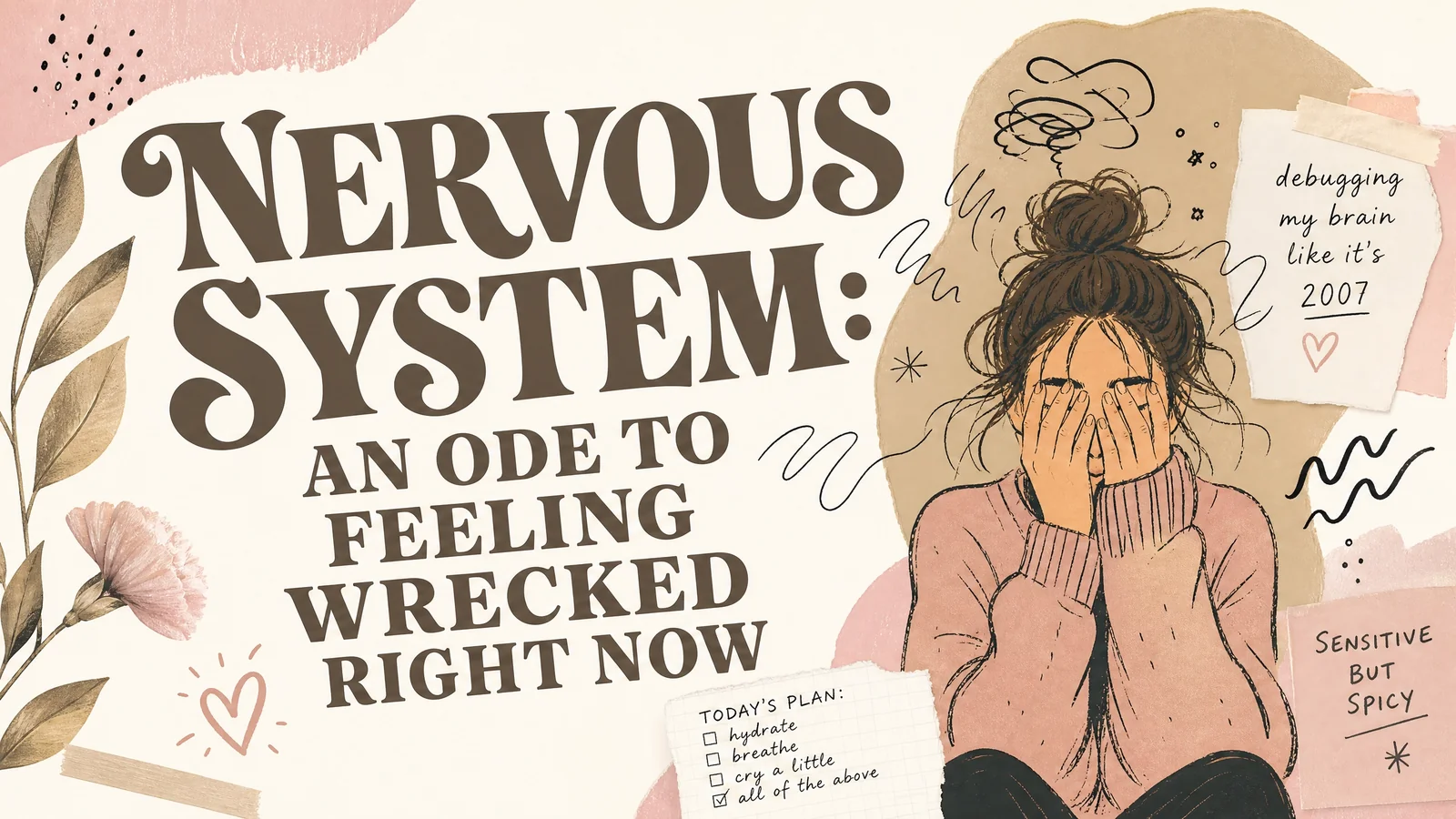
The Nervous System & Endocrine System
Key Takeaways
- Feeling “wrecked” or dysregulated is often a rational response to external stressors rather than a personal failure or character flaw.
- Effective nervous system regulation begins with curiosity and listening to the body’s signals rather than attempting to “fix” or optimise symptoms immediately.
- Somatic awareness allows women to recognise early signs of burnout and align their habits with their hormonal health and menstrual cycle.
- True healing involves moving away from self-criticism and granting oneself permission to rest, slow down, and respond to the body’s actual needs.
- All of this has a huge impact on our endocrine system. Remember, the Nervous System and Endocrine System are closely linked.

The quiet intelligence of my Nervous System
When I work with clients, I notice the same thing again and again. So many women are carrying a low-level panic that sits under everything else. They often come to somatic therapy seeking a quick fix for their state of being. Their nervous system regulation feels inconsistent, as they move between being wired, tired, reactive, or numb. They want to fix it as fast as possible, craving calm, control, or anything that will make the body settle down.
I understand that impulse. I have felt it too.
Still, I do not see feeling wrecked as a failure. I see it as information.
My nervous system is built to notice safety, threat, pressure, uncertainty, and change. It is always scanning. When it senses a threat, it can trigger a fight or flight response, pulling me into survival mode to cope with the world around me. The constant barrage of news, endless comparison, and daily stress can overwhelm the vagus nerve and inhibit the parasympathetic nervous system, especially when I carry the weight of past traumatic experiences. Because of this, my body does not only respond to what is happening inside; it responds to the life around me as well.
So when I experience physical sensations like feeling stretched thin, jumpy, flat, or exhausted, my body may be telling the truth about my conditions. It may be responding exactly as it should.
I think a lot of women are taught to turn this into a personal problem. If they have a dysregulated nervous system, they are told they need more breathwork, better habits, a stronger mindset, or faster emotional regulation to achieve healing. Sometimes, they are told that more intense somatic therapy is the only way to perform better. That kind of thinking places the blame on the individual and ignores the world they are living in.
I do not find that helpful.
What helps me more is to treat my body with respect. Regulation still matters. Rest still matters. Slowing down still matters. However, those things land differently when I stop using them as another way to criticise myself.
I get better results when I ask, “What is my system responding to?” and “What does it need from me now?”
Often the answer is not optimisation. Often the answer is permission.
Pin this for later ⬇️
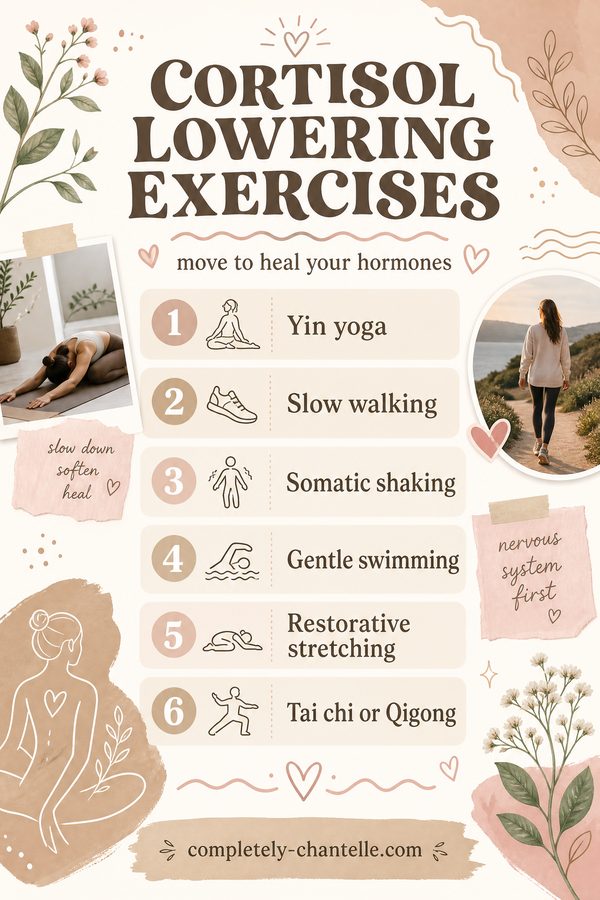
Somatic Awareness and hormonal health
This is where somatic awareness matters for me. When I slow down enough to cultivate a deeper sense of body awareness, I start to notice patterns that words alone miss. By paying closer attention to my physical sensations, I can feel when I am on the edge of burnout. I can feel when my cycle is asking for more rest, less stimulation, or a different pace.
That matters because hormonal health is deeply tied to the mind-body connection. My cycle does not live in a vacuum. My body uses interoception to constantly track bodily sensations, processing stress, safety, sleep, food, movement, and emotional load. By tuning into these physical sensations, I am better able to support my nervous system regulation. When I ignore those signals, I usually feel it in my mood, my energy, my sleep, and my cycle.
I have seen this in myself and in the women I support. Even when traumatic experiences are not immediately obvious, the body keeps score in ordinary ways. This manifests in bodily sensations like missed periods, heavy bleeding, PMS that feels sharper than usual, exhaustion that does not lift, or the sense that everything feels harder than it should.
Frequently Asked Questions
What is somatic therapy and how does it help with nervous system regulation?
Somatic therapy focuses on the connection between the mind and the body by paying close attention to physical sensations rather than just talk therapy. It helps regulate the nervous system by using techniques like grounding and mindful body scans to help the body release stored tension and exit survival mode.
Why does my body feel like it is in a constant state of panic?
Your nervous system is designed to constantly scan for threats, and modern stressors like constant news or daily pressures can keep it stuck in a fight or flight response. If you have experienced past trauma, your body may be reacting to current environments with heightened sensitivity, making it feel difficult to settle down.
How does my menstrual cycle influence my need for somatic regulation?
Hormonal health is deeply linked to your nervous system, and your cycle acts as a barometer for your overall stress and well-being. By practicing somatic awareness, you can identify which phase of your cycle requires more rest, less stimulation, or specific supportive actions to prevent burnout.
Is it possible to regulate my nervous system without using intense exercise or strict habits?
Yes, regulation is not about performing more tasks or adhering to strict regimens that add pressure. Often, the most effective path involves listening to what your body is signaling—whether that is more sleep, nourishing food, or simply permission to stop pushing through.
Where I begin
I start by listening before I try to fix.
I ask what feels too much, what feels missing, and where my body is asking for ease. Sometimes that means less screen time. Sometimes it means more food, more sleep, or a gentler week. I often find this ease through grounding techniques, gentle breathing exercises, or mindful body scans. Sometimes it means noticing that I have been pushing through for too long and giving myself permission to stop.

Our bodies are intelligent. I think many of us have been taught to doubt that intelligence, especially as women. Somatic awareness and paying attention to interoceptive processes help me come back to it.
If my body feels wrecked, I do not rush to shame it into shape. I listen. I slow down. I ask better questions. Nervous system regulation is the foundation of this process, which I achieve through somatic therapy, somatic exercises, grounding techniques, and breathing exercises. By using mindful body scans and specific breathing exercises to release tension, I am able to cultivate effective self-regulation tools. This path of trauma recovery and emotional regulation allows me to release tension by simply listening to my bodily sensations. Nervous system regulation is the ultimate goal, and that is where I begin.

Hormonal Health: Signs you have a Hormonal Imbalance
The Ultimate Guide to Eating and Moving for Your Specific Cycle Phase
Somatic Wisdom vs. The 20-Step Routine
The Luteal Phase: Why do I feel like a different person every three weeks?
Energy Crashes: Understanding Your Body’s Signals
Cycle Syncing: Exercising for Your Cycle to Beat PMS Symptoms
4 Types of PCOS Explained, Symptoms and Causes
How to Support Yourself During the Luteal Phase
Hormonal Health Basics for Women: A Guide
Hormonal Wellbeing: Your Hormonal Happiness
Healthy Habits and Your Hormones: How your everyday habits affect your cycle
Why building Somatic Awareness helps your menstrual cycle
Why Your Nervous System Holds the Key to Hormonal Balance
The Luteal Phase: “I know all this but I can’t move”
An ode to ‘feeling wrecked’ right now
Your Hormones aren’t betraying you
Trauma and Your Hormones: Understanding the Silent Connection
Body Literacy: Let’s stop chasing the ‘perfect’ cycle
The Hormone Powerhouse: A love letter to my liver
My Hormones + Hakomi: The 5 simple principles of Hakomi that overhauled my PCOS
From PCOS to PMOS: A Journey in Understanding my Hormonal Health
Data vs. Soul: What My Toxic Hormone Coach Taught Me About Sovereignty

