Menu
Supporting yourself through your Luteal Phase
The luteal phase is the specific portion of the menstrual cycle that occurs after the follicular phase and before the arrival of your menstrual period. It represents the time between ovulation and when you begin to bleed. For many people, this transition is when mood dips, energy drops, cravings get louder, and sleep or focus start to suffer.
That is normal for plenty of bodies. Hormone shifts within the menstrual cycle can change what you need, so small adjustments often help more than trying to push through.
Pin it for later ⬇️

Key Takeaways
- The luteal phase is the period between ovulation and menstruation, often characterized by hormonal shifts that can affect mood, energy, appetite, and sleep.
- Managing symptoms is most effective when you adjust your lifestyle to match your body’s changing needs, such as opting for gentler movement and stabilizing blood sugar with regular meals.
- Prioritizing rest, setting boundaries with your schedule, and lowering expectations during this time can significantly reduce feelings of irritability and stress.
- While mild premenstrual symptoms are normal, you should seek professional medical advice if symptoms become severe, disruptive, or negatively impact your daily life and mental health.
What changes during the luteal phase, and why it can feel harder
After ovulation, the corpus luteum begins to form, which causes a steady rise in progesterone while estrogen levels shift. This phase typically lasts about 14 days, though cycle lengths vary. The LH surge triggers this transition, marking the end of the fertile window and the beginning of the body’s preparation for a potential pregnancy. During this time, the uterine lining, also known as the endometrium, thickens within the uterus to provide a supportive environment for a fertilized egg. The NHS guide to the menstrual cycle explains how these hormonal shifts can affect your appetite, sleep, and mood.
Progesterone can make you feel sleepier or slower, and some people notice more hunger or fuzzier focus. While some people feel only mild changes, others need more rest, more food, or more quiet than they did a week earlier.

Common luteal phase symptoms to look out for
Common PMS symptoms include bloating, breast tenderness, headaches, cravings, low energy, irritability, anxiety, and brain fog. You may also notice acne or feeling warmer at night. You may experience one symptom or several, and they do not need to be dramatic to count.
The pattern matters more than a perfect symptom list. If the same changes keep showing up before your period, pay attention to that rhythm. This is also helping you build strong body literacy.
When normal premenstrual changes become something more
Milder premenstrual changes are common. However, if symptoms are severe, last most of the luteal phase, or disrupt work, study, sleep, or relationships, speak to a GP. Strong mood changes can point to PMS or PMDD, and you do not have to manage that alone. There is so much we can do with our nutrition, supplements, nervous system and lifestyle, but it is important to recognise if you find yourself unable to cope around your luteal phase/menstrual (when we experience the most hormonal dips) and if it points to PMDD. Please seek your GP if you suspect you may be suffering with this.
Support your body with simple food and movement choices
Pin it for later ⬇️
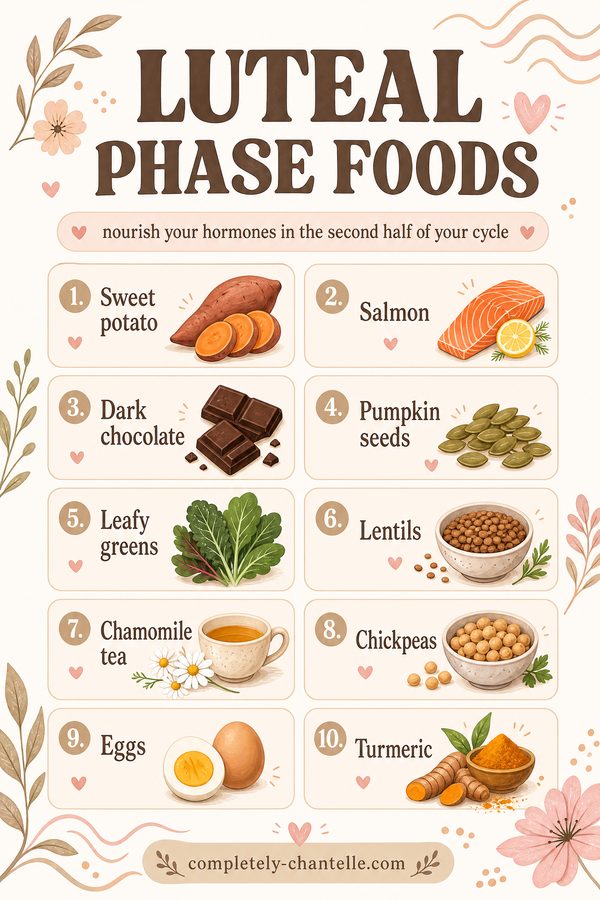
The aim here is not perfection. During the luteal phase, which serves as the final stretch before menstruation, regular meals and gentler movement often work better than strict plans or punishing workouts.
During this time, your uterus requires specific nutrients to support its preparation for a potential pregnancy, which is why your body may signal a higher demand for energy. Try to build meals around protein, fibre, healthy fats, and slow-release carbohydrates. Oats with yoghurt and fruit, eggs on wholegrain toast, beans with rice, or soup with lentils are all easy options. Slow-release carbs are particularly helpful because they provide steadier energy levels, rather than the quick sugar spike and crash associated with a pastry grabbed on the run.
It also helps to eat regularly. If you skip lunch, that late-afternoon biscuit hunt can feel impossible to ignore.
Cravings are not a character flaw. Sometimes they are a sign that you are hungry, tired, or both, so a proper meal or snack usually helps more than trying to out-willpower them.
How to move in a way that feels supportive, not punishing
If your usual workout feels harder, that does not mean you lost fitness. Walking, yoga, stretching, mobility work, Pilates, or a shorter strength session can feel better when energy is lower. If you usually train hard, shifting one or two sessions down a gear can protect your recovery instead of draining your reserves.
Rest counts too. When your body feels heavy, sore, or flat, a night off can be the smarter choice.
Make space for your mood, sleep, and stress levels
Physical symptoms get more attention, but the mental side can be just as draining.
Ways to calm irritability, anxiety, and low mood
Start by naming what is happening. If you catch yourself thinking, “I am useless,” pause and try, “I am in my luteal phase and I am overloaded.” That small shift can stop a bad evening from getting bigger. Whether you experience these fluctuations naturally or while using hormonal birth control, tools like journalling for five minutes, taking a short walk, breathing slowly, or stepping away from your phone can all help stabilize your mood.
Lower your expectations when you need to. That is not giving up, it is responding to the day you are having.
Protect your sleep when your cycle makes it harder
Sleep can go off track because hormones affect temperature, appetite, and restlessness during this part of the menstrual cycle. A regular bedtime helps, and so does cutting down caffeine later in the day. Keep the room cool, make it darker, and leave heavy meals until earlier in the evening if that suits you.
If you wake more in the night, keep the next evening calm instead of chasing perfect sleep with more effort. Better sleep will not erase every symptom, but it often makes the luteal phase easier to handle.
Use boundaries to reduce stress before your period
If you already know a certain week feels fragile, plan for that instead of ignoring it. Say no to extra plans more often. Move demanding tasks earlier in the month when you can. Leave gaps in your diary, order an easy dinner, and protect a bit of quiet time.
That kind of planning is practical. It can stop small stressors from piling up when your patience is already low.
Plan ahead so the luteal phase feels less overwhelming
A little prep can make this phase feel less like an ambush.
Build a few go-to habits for each month
Keep it simple enough that you will actually do it. Stock the kitchen with easy meals, keep pain relief or period products where you can find them, and choose two or three soothing habits you can repeat every month. That might be earlier nights, fewer social plans, and a 20-minute walk after work.
These habits help manage the hormonal shifts driven by your pituitary gland, which regulates the complex release of follicle-stimulating hormone and luteinizing hormone. The goal is not a perfect routine, but a familiar one that asks less of you when you already feel stretched by your fluctuating hormones.

Frequently Asked Questions
How long does the luteal phase usually last?
The luteal phase typically lasts about 14 days, starting right after ovulation and ending when your menstrual period begins. While this is the average, it is perfectly normal for individual cycle lengths to vary.
Why do I feel hungrier during this phase?
Your body is preparing for a potential pregnancy, which increases its metabolic demand and energy requirements. Eating regular meals with protein, fiber, and slow-release carbohydrates can help manage these cravings and keep your energy stable.
Is it okay to skip my workouts when I feel tired?
Absolutely; listening to your body is a key part of managing your cycle. If high-intensity training feels punishing, try shifting to gentler activities like walking, yoga, or stretching to support your recovery instead of draining your reserves.
When should I talk to a doctor about my symptoms?
You should speak with a GP if your symptoms are severe, last for the majority of the luteal phase, or significantly disrupt your work, studies, or relationships. If you notice persistent irregular cycles or experience intense mood changes, it is important to seek professional guidance rather than trying to manage it alone.
A gentler way through the luteal phase
The luteal phase does not have to be a fortnight of white-knuckling your way through the day. When you listen to the cues from your uterus, eat regularly, move more gently, sleep a bit earlier, and lower the pressure, the menstrual cycle often feels easier to navigate.
By paying attention to your body during menstruation and the transition into your luteal phase, you can better manage your needs. If this part of the month feels louder than the rest, treat that as useful information rather than a setback. Small, repeatable changes can make a real difference in how you experience your menstrual cycle, and getting support is a proactive way to care for yourself, not a last resort. Taking these steps can transform your relationship with your body as you move through each luteal phase.
Want more support? Book a Luteal Phase support session with me
Hormonal Health: Signs you have a Hormonal Imbalance
The Ultimate Guide to Eating and Moving for Your Specific Cycle Phase
Somatic Wisdom vs. The 20-Step Routine
The Luteal Phase: Why do I feel like a different person every three weeks?
Energy Crashes: Understanding Your Body’s Signals
Cycle Syncing: Exercising for Your Cycle to Beat PMS Symptoms
4 Types of PCOS Explained, Symptoms and Causes
How to Support Yourself During the Luteal Phase
Hormonal Health Basics for Women: A Guide
Hormonal Wellbeing: Your Hormonal Happiness
Healthy Habits and Your Hormones: How your everyday habits affect your cycle
Why building Somatic Awareness helps your menstrual cycle
Why Your Nervous System Holds the Key to Hormonal Balance
The Luteal Phase: “I know all this but I can’t move”
An ode to ‘feeling wrecked’ right now
Your Hormones aren’t betraying you
Trauma and Your Hormones: Understanding the Silent Connection
Body Literacy: Let’s stop chasing the ‘perfect’ cycle
The Hormone Powerhouse: A love letter to my liver
My Hormones + Hakomi: The 5 simple principles of Hakomi that overhauled my PCOS
From PCOS to PMOS: A Journey in Understanding my Hormonal Health
Data vs. Soul: What My Toxic Hormone Coach Taught Me About Sovereignty

