Menu
Trauma and Hormones: The Quiet Link I keep coming back to
When I first started exploring the root causes of my health struggles, I did not expect to find myself investigating the intricate connection between past experiences and physiological wellbeing. Yet, as I dug deeper into the science of the nervous system, it became clear that trauma and hormones are inextricably linked. For many of us, chronic stress and unresolved emotional burdens are not just mental health challenges; they are biological signals that reshape how our bodies produce and regulate vital chemical messengers. Understanding this relationship has fundamentally changed how I view my own health, moving the conversation away from simple symptoms and towards a more compassionate, integrated approach to healing.
Key Takeaways
- The Stress-Hormone Connection: Unresolved trauma triggers the body’s survival response, causing the nervous system to remain in a state of high alert that disrupts the endocrine system’s delicate balance.
- HPA and HPO Axis Interaction: Chronic stress (via the HPA axis) often diverts resources away from reproductive functions (the HPO axis), frequently leading to irregular cycles and intensified PMS or PMDD symptoms.
- Beyond Cortisol: While cortisol is a primary stress hormone, trauma also impacts progesterone production, oestrogen signalling, oxytocin levels, and thyroid function, all of which influence mood and emotional regulation.
- Somatic Healing: Moving towards balance involves ‘re-teaching’ the nervous system that it is safe through somatic practices, cycle syncing, and nervous system regulation rather than simply treating isolated symptoms.
How trauma changes the way I understand hormones
I used to think of stress as something that sat mostly in the mind. Over time, I learned that the stress response system and the body never forget past experiences. Whether it stems from adulthood or childhood trauma, these events leave an imprint that can significantly impact long-term mental health. When stress is brief, the body usually settles again. When trauma lingers, the stress response can stay switched on for far too long, and that changes how the endocrine system works.
The endocrine system is the network of glands that make and release hormones. It helps shape energy, mood, sleep, reproduction, metabolism, and more. When the connection between trauma and hormones is part of the picture, that system can feel less steady. The body starts acting as if safety is scarce, and it puts survival first.

The HPA and HPO axes
I think of the HPA axis and the HPO axis as two vital systems that need to stay in step to keep us functioning well.
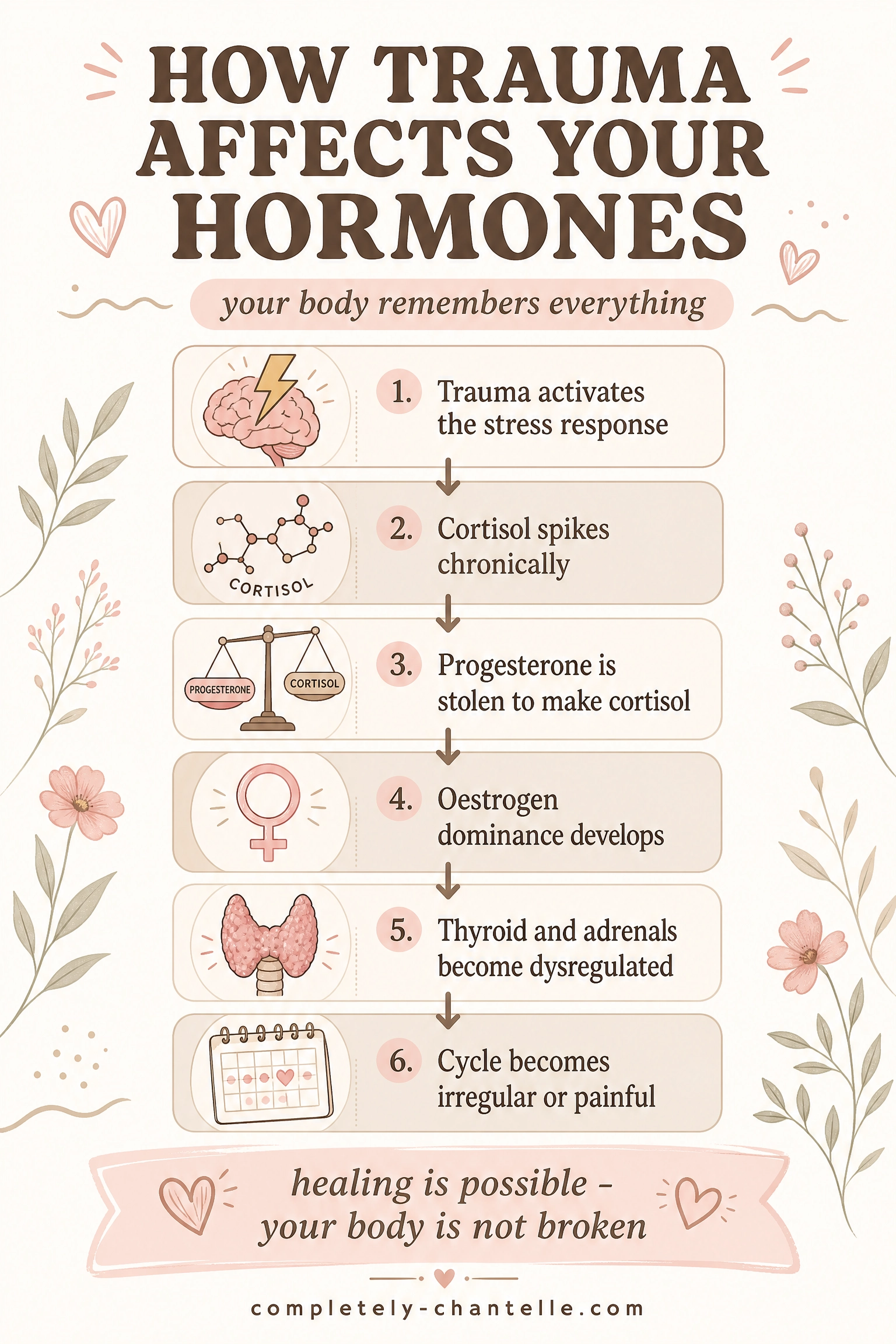
The HPA axis, which creates a critical communication loop between the hypothalamus, the pituitary gland, and the adrenal glands, is central to our stress response. When the brain senses danger, this system helps release cortisol and other stress hormones so the body can react quickly to survive.
The HPO axis connects the hypothalamus and pituitary gland to the ovaries, and it plays a vital role in regulating ovarian hormones and the menstrual cycle. When the HPA axis is under constant pressure from chronic stress, the HPO axis often receives less support. In plain terms, the body can decide that immediate survival matters more than reproductive function.
That shift can affect cycles, ovulation, and the way I feel throughout the month.
How cortisol is only part of the picture
Cortisol is usually the first hormone people mention when they talk about stress, but it is only one part of the story. With ongoing trauma, cortisol can stay too high for too long, or the stress response can become blunted. Elevated cortisol levels can impact the hippocampus, which is vital for memory, and the amygdala, which governs our fear processing. Both patterns take a significant toll.
Progesterone is often called the calming hormone, and it can be affected when stress runs high. The body may divert the raw materials it would normally use for progesterone towards cortisol production instead. People sometimes call this progesterone steal. When that happens, PMS symptoms and PMDD symptoms can feel harsher, especially in the luteal phase.
Oestrogen matters too. In particular, estradiol is a key hormone to consider. Lower estrogen levels are linked with poorer fear processing and more symptoms of post-traumatic stress disorder, while higher levels may offer some protection regarding how we handle fear memory and extinction. That matters because hormones do not sit apart from the brain; they shape how the body stores traumatic stress, how it calms down, and how it returns to baseline.
Oxytocin is another hormone I pay close attention to as a primary safety signal. It is often linked with connection, comfort, and safety. When trauma lowers oxytocin, the body can feel less settled and more guarded. That can affect the signals that help regulate the reproductive system as well.
I also see a connection between trauma, post-traumatic stress disorder, and thyroid problems. A trauma history can raise the risk of autoimmune thyroid disease, including Hashimoto’s thyroiditis, often mediated by systemic inflammation. When the thyroid is out of balance, energy, temperature, mood, and cycle health can all shift as well.
What survival mode does to the body
When my nervous system remains in survival mode, it reflects the activation of the brain’s threat-detection circuitry. Triggered by the amygdala, my body makes practical choices based on perceived danger to protect what it deems essential in that moment. Functions such as ovulation and efficient digestion may be reduced because they are not prioritised for immediate survival. Often, this long-term state of dysregulation is rooted in childhood trauma or early life adversity, which shapes how our systems respond to stress over time.
For many, this manifests as irregular periods, missed ovulation, or more intense luteal and menstrual discomfort, all driven by hormonal fluctuations that have fallen out of sync with the body’s actual needs. It can also show up as feeling permanently worn down, wired, or simply unable to recover properly.
There is another vital piece I keep in mind. During the luteal and menstrual phases, the body naturally requires more energy, often needing around 300 extra calories. If I push through those phases with high-intensity training or strict eating, I add further stress to a system that may already be stretched. That approach can inadvertently keep the cycle of dysregulation going.
Pin this for later ⬇️
What has helped me move towards balance
I come back to somatic work because it gives the body a chance to feel safe again. Trauma-informed care is not about forcing calm; it is about giving the nervous system small, steady cues that say, “You are safe enough right now.” For those of us navigating the lasting effects of early life adversity, these practices are essential for developing consistent emotional regulation.
Gentle self-touch, soft stretching, and havening can all help create that sense of safety. These practices calm the body, providing a foundation for better emotional regulation and supporting a steadier relationship between the HPA and HPO axes.
Polyvagal Theory has also helped me make sense of what I feel. It gives language to the way the body shifts between states of threat, shutdown, and connection. The goal is not to stay perfectly calm all the time, but to widen the window of tolerance so I can meet more of life without tipping into overwhelm or collapse.
Cycle syncing can also play a vital role in recovery. By matching food, movement, and rest to the specific phases of the menstrual cycle, I can better support my endocrine system. When I honour the slower autumn and winter phases, I place less strain on my body. I no longer feel the need to treat every week as if my physiological needs remain the same.
I also look for ordinary sources of oxytocin, because they matter more than they are often given credit for in helping to settle the HPA axis. Warm connection, joy, gentle touch, time with trusted people, and small moments of comfort all give the body a reason to soften. That matters when I am trying to teach my system that safety is real, particularly when my nervous system is still responding to the shadows of past experiences.
Frequently Asked Questions
How does childhood trauma specifically impact adult hormone health?
Early life adversity can recalibrate the body’s threat-detection system, keeping the nervous system in a chronic state of survival mode. This long-term dysregulation often manifests in adulthood as persistent hormonal imbalances, irregular menstrual cycles, and an increased susceptibility to autoimmune conditions.
What is the ‘progesterone steal’ and why does it happen?
This occurs when the body, under constant stress, prioritises the production of cortisol over other hormones like progesterone. Because they share common raw materials, the body ‘steals’ these resources for stress management, which can lead to lower progesterone levels and more severe luteal phase symptoms.
How can I use cycle syncing to support a traumatised nervous system?
Cycle syncing involves aligning your diet, exercise, and rest patterns with the natural phases of your menstrual cycle. By honouring the body’s need for lower intensity and more nourishment during the luteal and menstrual phases, you avoid adding unnecessary stress to an already taxed endocrine system.
Is it possible to heal hormonal issues caused by trauma?
Healing is less about ‘fixing’ a broken system and more about providing your nervous system with consistent cues of safety. Through somatic work, gentle movement, and nervous system regulation, you can widen your window of tolerance and help your body move out of a constant survival state.
Where you can begin
For me, healing starts with paying attention to the body instead of arguing with it. When I understand childhood trauma and hormones together, I can stop treating my symptoms like enemies and start listening to them as vital information. This perspective is essential for long-term mental health, as it allows us to map our internal somatic experiences through the entorhinal cortex, moving beyond mere survival to a place of genuine integration.
My body is not broken. It is communicating. When I listen, I can meet it with more steadiness, and that changes everything.

Hormonal Health: Signs you have a Hormonal Imbalance
The Ultimate Guide to Eating and Moving for Your Specific Cycle Phase
Somatic Wisdom vs. The 20-Step Routine
The Luteal Phase: Why do I feel like a different person every three weeks?
Energy Crashes: Understanding Your Body’s Signals
Cycle Syncing: Exercising for Your Cycle to Beat PMS Symptoms
4 Types of PCOS Explained, Symptoms and Causes
How to Support Yourself During the Luteal Phase
Hormonal Health Basics for Women: A Guide
Hormonal Wellbeing: Your Hormonal Happiness
Healthy Habits and Your Hormones: How your everyday habits affect your cycle
Why building Somatic Awareness helps your menstrual cycle
Why Your Nervous System Holds the Key to Hormonal Balance
The Luteal Phase: “I know all this but I can’t move”
An ode to ‘feeling wrecked’ right now
Your Hormones aren’t betraying you
Trauma and Your Hormones: Understanding the Silent Connection
Body Literacy: Let’s stop chasing the ‘perfect’ cycle
The Hormone Powerhouse: A love letter to my liver
My Hormones + Hakomi: The 5 simple principles of Hakomi that overhauled my PCOS
From PCOS to PMOS: A Journey in Understanding my Hormonal Health
Data vs. Soul: What My Toxic Hormone Coach Taught Me About Sovereignty

