How I Balance Polycystic Ovary Syndrome Symptoms Naturally
Some days, life with PCOS can feel like waking up in a body that keeps changing the rules. My period may go missing, my skin may flare, my energy can sink by mid-afternoon, and the scales may refuse to budge or show unexpected weight gain no matter how sensible I think I have been. Then there are the various PCOS symptoms, such as hair changes, intense cravings, persistent bloating, and mood shifts, that can make an ordinary week feel heavier than it should.
I have learned that natural support can help, but it rarely works overnight. Small changes, repeated often, usually matter more than one perfect week. If you are in the UK and want realistic steps you can start now, while keeping your GP in the loop where needed, this is the approach I keep coming back to.
Key Takeaways
- PCOS symptoms often show up in clusters, not as one neat problem.
- Steadier blood sugar can help with cravings, energy dips, and menstrual cycles.
- I get better results from lifestyle changes like regular meals, manageable movement, decent sleep, and lower stress than from strict rules.
- Supplements may help some women, but they need a safety check first.
- Medical support matters if symptoms are severe, new, or changing.
What PCOS symptoms can look like in everyday life
In real life, polycystic ovary syndrome rarely arrives politely. I tend to think of it as a pattern rather than a single symptom, because irregular periods often sit alongside acne, oily skin, and excessive hair growth, which is medically known as hirsutism. Thinning hair on the scalp, bloating, cravings, and persistent fatigue are also common. Furthermore, for many women, difficulty with weight loss and concerns regarding infertility are significant aspects of their experience.
For some women, the main issue is their cycle. For others, it is skin, hair, or feeling hungry and drained all the time. Meanwhile, someone else may have regular periods and still struggle with other symptoms. That variety can make this condition confusing, and it can also make women doubt themselves when their experience does not match somebody else’s.
Symptoms can overlap with other health problems too. If something feels off, a proper check-up matters because thyroid issues and other conditions can look similar.
Why blood sugar and hormones can feel out of sync
For many women, insulin resistance sits somewhere in the background. In simple terms, insulin helps move sugar from the blood into the body’s cells. When the body stops responding well to insulin, it often needs to make more of it.
That extra insulin can nudge the ovaries to make higher androgen levels, which are hormones linked with acne, hirsutism, and cycle disruption. This creates a broader hormonal imbalance that can also show up as strong cravings, shaky energy, and that flat feeling after a high-sugar snack. I notice this most when breakfast is light on protein and heavy on sweet foods. My energy climbs fast, then drops just as quickly.
When to speak to a GP about your symptoms
I do not think this condition is something to self-diagnose from social media. If your periods disappear for months, bleeding is very heavy, acne becomes severe, hair loss feels sudden, or low mood and anxiety start affecting your daily life, book a GP appointment. A GP may suggest blood tests and an ultrasound scan to look for polycystic ovaries before deciding what is going on.
The NHS guidance on PCOS symptoms and treatment is a helpful place to start, especially if you are trying to make sense of the basics before your appointment. If your mental health is slipping into crisis, seek urgent help through NHS 111, Samaritans on 116 123, or A&E.
The food habits I focus on first to steady PCOS symptoms
Food is where I usually notice the fastest day-to-day shift, not because I follow a strict diet, but because steadier meals help me feel less hijacked by hunger and energy crashes. When living with polycystic ovary syndrome, I don’t chase perfection. Instead, I aim for meals that keep blood sugar more even, as this is essential for managing insulin levels and reducing the risk of long-term complications like type 2 diabetes, cardiovascular disease, and obesity. Focusing on these blood-sugar-balancing habits is also a sustainable way to manage weight gain, leaving me feeling more satisfied for hours at a time.
When I build meals around protein, fibre, and slower-release carbohydrates, I get fewer crashes and fewer desperate rummages through the cupboard. Protein can come from eggs, Greek yoghurt, chicken, tofu, beans, lentils, fish, or cottage cheese. Fibre often shows up through vegetables, fruit, oats, pulses, and wholegrains. Then I add carbs that digest more slowly, such as porridge oats, wholemeal toast, brown rice, or sweet potato.
A simple plate might be grilled salmon with roasted veg and brown rice, or lentil soup with a slice of wholemeal bread and a side salad. Breakfast can be just as steadying, for example yoghurt with oats, berries, and seeds. The BDA’s advice on PCOS and diet matches this balanced approach and avoids fad-diet thinking.
Small swaps that can make a big difference
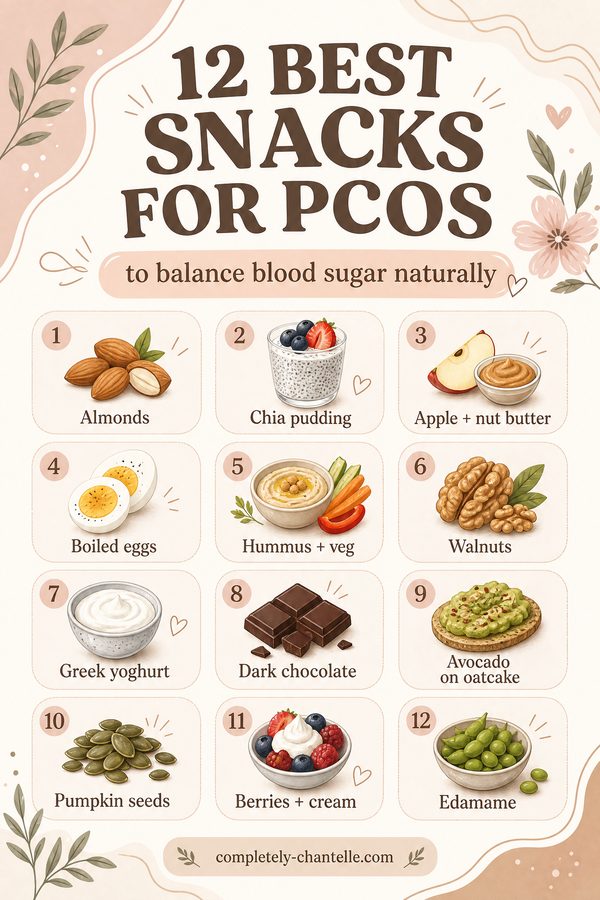
I prefer small swaps because they feel doable on a tired Tuesday. Adding nuts or seeds to breakfast can make it more filling. Choosing wholegrain cereal or bread more often can help slow the post-meal slump. Pairing fruit with yoghurt, peanut butter, or a few almonds tends to satisfy me for longer than fruit on its own.
Sugary snacks do not need a moral label, but I find they work better as occasional treats than everyday fuel.
How I eat when cravings hit hard
Cravings can feel fierce with PCOS, and guilt only makes them louder. I do better when I plan for them. A snack with protein and fibre, such as an apple with peanut butter or yoghurt with berries, takes the edge off before I end up overeating whatever is nearest.
I also try to avoid long gaps between meals, because waiting until I am ravenous usually backfires. A glass of water and a ten-minute pause can help me work out whether I want food, comfort, or a break. Sometimes the answer is still chocolate, and that is fine. The difference is that I choose it rather than tumble into it.
Movement, sleep, and stress: the daily habits that help PCOS feel easier to manage
Lifestyle advice often gets framed as a giant project, yet I manage this metabolic disorder better when the habits are ordinary enough to repeat. Consistency beats intensity, and tiny changes still count.
The best kind of exercise is the one I can keep doing
I do not believe exercise has to be punishing to help. Walking, cycling, swimming, strength training, Pilates, and short home workouts can all support PCOS. Building muscle matters because it helps the body use insulin more effectively, which may support regular ovulation, so even two or three short strength sessions a week can be useful.
On busy weeks, a brisk 25-minute walk does more for me than an all-or-nothing gym plan I abandon after three days. If a workout leaves me exhausted and resentful, I probably will not stick with it.
Small habits, repeated most days, usually help more than heroic bursts.
Why better sleep can calm a rough PCOS week
Poor sleep can make hunger louder, moods shakier, and energy thinner the next day. That matters with PCOS because the whole day can start to feel like a climb. When I protect sleep, cravings tend to soften and my patience comes back.
I keep this simple. I cut back on caffeine later in the day, dim lights in the evening, and aim for a regular bedtime even when life is messy. Keeping my phone out of bed helps more than I like to admit.
Ways I lower stress before it spills into my body
Stress does not cause PCOS on its own, but it can make symptoms feel sharper. When I am overloaded, I sleep worse, snack more, and lose the routines that keep me steady. Making consistent lifestyle changes is vital, as these habits help reduce the risk of long-term complications like high blood pressure, endometrial cancer, and obesity. I treat stress care as support work, not a luxury.
Breathing exercises, journalling, a walk outside, and saying no to one extra thing can all help. Sometimes I need more than that, and talking to a friend, counsellor, or GP makes sense. I like the Leeds Teaching Hospitals PCOS guide because it keeps lifestyle advice grounded and practical.
Natural support options that can help, and what to be careful with
Supplements can be a helpful addition to a wider management plan for polycystic ovary syndrome, provided they are chosen with care. When used alongside consistent lifestyle habits, certain nutrients may support your hormonal balance and help address common concerns such as irregular periods. Furthermore, targeting inflammation and insulin sensitivity through evidence-based supplementation can often lead to clearer, healthier skin for those who struggle with persistent acne. Always consult with a healthcare professional before adding new supplements to your routine, as it is essential to ensure they are safe and appropriate for your individual needs.
Frequently Asked Questions
Is it possible to manage PCOS without medication?
Many women find that consistent lifestyle changes, such as balancing blood sugar through nutrition and regular movement, significantly improve their symptoms. While these habits are powerful, they work best alongside medical guidance, especially if your symptoms are severe or if you are struggling with fertility.
Can diet changes really improve my acne and hair growth?
Because these symptoms are often linked to insulin levels and androgen production, steadying your blood sugar through a balanced diet can help manage them. It is not an overnight fix, but nourishing your body with protein, fibre, and complex carbohydrates often helps support clearer skin and better hormonal balance over time.
How do I know if I have PCOS or if it is something else?
Because PCOS symptoms overlap with conditions like thyroid issues, it is essential to get a formal diagnosis from your GP. If you have noticed irregular periods, sudden changes in weight, or persistent skin and hair issues, booking an appointment for blood tests and an ultrasound is the safest way to find out what is happening.
Does exercise have to be high-intensity to help with PCOS?
Not at all, and in some cases, gentle or consistent movement is more sustainable than high-intensity exercise that leaves you burnt out. Strength training, brisk walking, and Pilates are all excellent choices because they help your body use insulin more effectively without placing excessive strain on your system.
Hormonal Health: Signs you have a Hormonal Imbalance
The Ultimate Guide to Eating and Moving for Your Specific Cycle Phase
Somatic Wisdom vs. The 20-Step Routine
The Luteal Phase: Why do I feel like a different person every three weeks?
Energy Crashes: Understanding Your Body’s Signals
Cycle Syncing: Exercising for Your Cycle to Beat PMS Symptoms
4 Types of PCOS Explained, Symptoms and Causes
How to Support Yourself During the Luteal Phase
Hormonal Health Basics for Women: A Guide
Hormonal Wellbeing: Your Hormonal Happiness
Healthy Habits and Your Hormones: How your everyday habits affect your cycle
Why building Somatic Awareness helps your menstrual cycle
Why Your Nervous System Holds the Key to Hormonal Balance
The Luteal Phase: “I know all this but I can’t move”
An ode to ‘feeling wrecked’ right now
Hormones in the High-Stress Era
Your Hormones aren’t betraying you
Trauma and Your Hormones: Understanding the Silent Connection
Body Literacy: Let’s stop chasing the ‘perfect’ cycle
The Hormone Powerhouse: A love letter to my liver
My Hormones + Hakomi: The 5 simple principles of Hakomi that overhauled my PCOS
From PCOS to PMOS: A Journey in Understanding my Hormonal Health
Data vs. Soul: What My Toxic Hormone Coach Taught Me About Sovereignty

