Menu
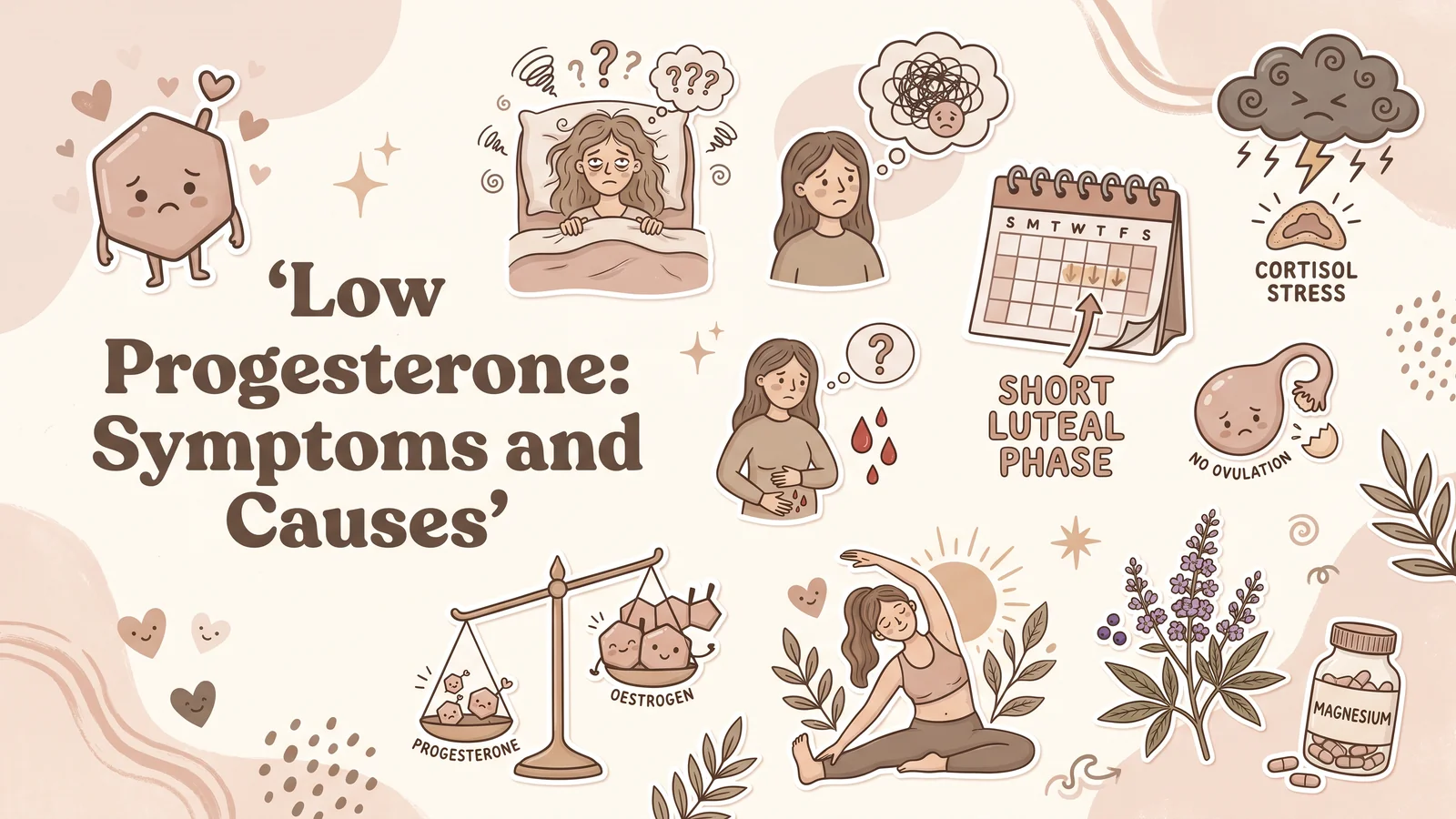
Low Progesterone: Symptoms, Causes and Next Steps
Progesterone rises mainly after ovulation and during pregnancy, with progesterone levels naturally fluctuating throughout your menstrual cycle. When these levels are low at the wrong point in your cycle, you may notice changes to periods, fertility, or early pregnancy.
Low progesterone can sound like a clear explanation for distressing symptoms, often pointing toward a broader hormonal imbalance. However, those symptoms overlap with many other conditions, so they cannot confirm a hormone problem on their own. You need the right test at the right point in your cycle, alongside a clinician’s assessment.
Key Takeaways
- Progesterone levels naturally fluctuate throughout your menstrual cycle, rising mainly after ovulation to help prepare the uterine lining.
- Symptoms of low progesterone—such as irregular periods, spotting, mood swings, and fertility challenges—often overlap with other health conditions and require a clinical assessment.
- Accurate testing depends heavily on timing, usually measured about seven days before your expected period rather than on a fixed cycle day.
- Treatment varies depending on your symptoms and reproductive goals, ranging from addressing underlying thyroid or ovulation issues to targeted hormone support.
Low progesterone: Symptoms and Causes you should know
Progesterone is a hormone made by the ovary after the ovulation process. During this stage, the corpus luteum helps prepare your uterine lining for a possible pregnancy. If pregnancy occurs, progesterone helps support the womb lining in early pregnancy.
After ovulation, progesterone also counterbalances oestrogen. Its level does not stay steady. It is usually low before ovulation, rises during the luteal phase, then falls before a period if you are not pregnant. A progesterone blood test measures a hormone level at one moment, so timing changes what the result means.
Low progesterone is often discussed when the luteal phase is short or ovulation has not happened. It can look different before pregnancy, during pregnancy, and through perimenopause. A single result without your cycle dates rarely tells the whole story.

How low progesterone can affect your menstrual cycle
Possible signs within your menstrual cycle include irregular periods, shorter cycles, spotting before a period, or heavy menstrual bleeding that seems unusual. You may also find it difficult to identify ovulation, particularly if your cycle length changes from month to month.
A shorter interval between ovulation and the next period may point to a short luteal phase, which often ties back to how the corpus luteum functions. Yet, low progesterone symptoms do not have one exclusive cause. Fibroids, endometriosis, thyroid disease, changing body weight, perimenopause, and other hormone shifts can also affect bleeding.
Keep a record rather than trying to diagnose yourself from one difficult month. Your usual cycle pattern matters more than an isolated change.
Low progesterone symptoms during pregnancy and after ovulation
After ovulation, you may notice spotting, breast tenderness, mood swings, sleep issues, or pelvic discomfort. These symptoms are common across the wider reproductive system and do not show whether progesterone levels are low. They also cannot predict whether a pregnancy will continue.
Bleeding and pain in pregnancy need prompt advice from your midwife, GP, early pregnancy unit, or NHS 111. Early pregnancy loss can happen for many reasons, and repeated loss needs sensitive medical assessment rather than assumptions about fluctuating progesterone levels.
Severe one-sided pain, shoulder-tip pain, fainting, dizziness, or heavy bleeding can be signs of an ectopic pregnancy or another emergency.
Call 999 or go to A&E if symptoms are severe. Do not wait for a routine hormone test when you feel acutely unwell.
What causes low progesterone in the first place?
The cause often matters more than the number on a single test. Because progesterone rises after ovulation, anything that prevents regular ovulation can lower your progesterone levels during the second half of a menstrual cycle.
Problems involving the ovaries, pituitary gland, or thyroid can all interfere with ovulation and lead to low progesterone. Lifestyle pressures may play a part for some people, but you should not blame yourself for every hormonal imbalance.
Ovulation problems, PCOS and perimenopause
If you disrupt the ovulation process, the corpus luteum fails to form properly, meaning there is not enough hormone produced to adequately support the uterine lining. This can lead to irregular periods, although some people still bleed regularly enough to assume they are ovulating.
Polycystic ovary syndrome, or PCOS, is a common reason for irregular ovulation. PCOS affects people differently. You might have unpredictable periods, acne, excess hair growth, weight gain, or none of these signs.
As you approach perimenopause, ovarian hormone production becomes less predictable. Ovulation may happen less often, so progesterone levels can fluctuate widely alongside various perimenopause symptoms. Primary ovarian insufficiency is different from typical perimenopause and causes reduced ovarian function before age 40. It needs medical assessment.

Medical conditions, medicines and everyday factors
An underactive or overactive thyroid can disturb your cycle, and monitoring overall thyroid function is often clinically useful. Raised prolactin, pituitary conditions, and reduced ovarian function can also affect ovulation and cause low progesterone readings, sometimes contributing to estrogen dominance.
Severe under-eating, very intense exercise, major weight change, and chronic stress may disrupt ovulation. Furthermore, high cortisol levels from chronic stress can further deplete your reserves, while nutrient deficiencies may worsen the picture and lead to fatigue or even anxiety and depression. However, stress is not a catch-all diagnosis, and persistent symptoms deserve proper checks.
Hormonal contraception and some other medicines can alter bleeding patterns and blood test results. Tell your GP about every prescription, over-the-counter medicine, supplement, and contraceptive method you use. Do not stop prescribed medicine without speaking to your GP or pharmacist first.
Treatment depends on the cause, your symptoms and your plans
There is no one-size-fits-all treatment for low progesterone. Your care depends on whether you are trying to conceive, pregnant, managing irregular bleeding, or dealing with perimenopause symptoms. Addressing any underlying hormonal imbalance often forms the core of an effective treatment plan.
Your clinician may treat an underlying thyroid or prolactin problem, or investigate issues related to estrogen dominance. Fertility services may support ovulation when this is appropriate. In selected situations, including some fertility treatment and early pregnancy circumstances, you may be offered progesterone to support healthy progesterone levels.
Progesterone can come as capsules, vaginal medication, or another form. Micronised progesterone is included in some UK hormone replacement therapy plans. If you have a womb and take oestrogen, you usually need a progestogen to protect the uterine lining. Your medical history and risk factors guide the safest option for hormone replacement therapy.
Avoid unregulated hormone creams and supplements sold online. Their dose, quality, and safety may be unclear. Eating regularly, avoiding extreme exercise, and managing chronic stress where possible can support your overall health. Addressing factors like high cortisol levels, nutrient deficiencies, and sleep issues can also help, alongside tracking how mood swings, weight gain, and anxiety and depression might affect your well-being, though these lifestyle steps do not replace medical care.

Hormonal Health: Signs you have a Hormonal Imbalance
The Ultimate Guide to Eating and Moving for Your Specific Cycle Phase
Somatic Wisdom vs. The 20-Step Routine
The Luteal Phase: Why do I feel like a different person every three weeks?
Energy Crashes: Understanding Your Body’s Signals
Cycle Syncing: Exercising for Your Cycle to Beat PMS Symptoms
4 Types of PCOS Explained, Symptoms and Causes
How to Support Yourself During the Luteal Phase
Hormonal Health Basics for Women: A Guide
Hormonal Wellbeing: Your Hormonal Happiness
Healthy Habits and Your Hormones: How your everyday habits affect your cycle
Why building Somatic Awareness helps your menstrual cycle
Why Your Nervous System Holds the Key to Hormonal Balance
The Luteal Phase: “I know all this but I can’t move”
An ode to ‘feeling wrecked’ right now
Your Hormones aren’t betraying you
Trauma and Your Hormones: Understanding the Silent Connection
Body Literacy: Let’s stop chasing the ‘perfect’ cycle
The Hormone Powerhouse: A love letter to my liver
My Hormones + Hakomi: The 5 simple principles of Hakomi that overhauled my PCOS
From PCOS to PMOS: A Journey in Understanding my Hormonal Health
Data vs. Soul: What My Toxic Hormone Coach Taught Me About Sovereignty

