Menu
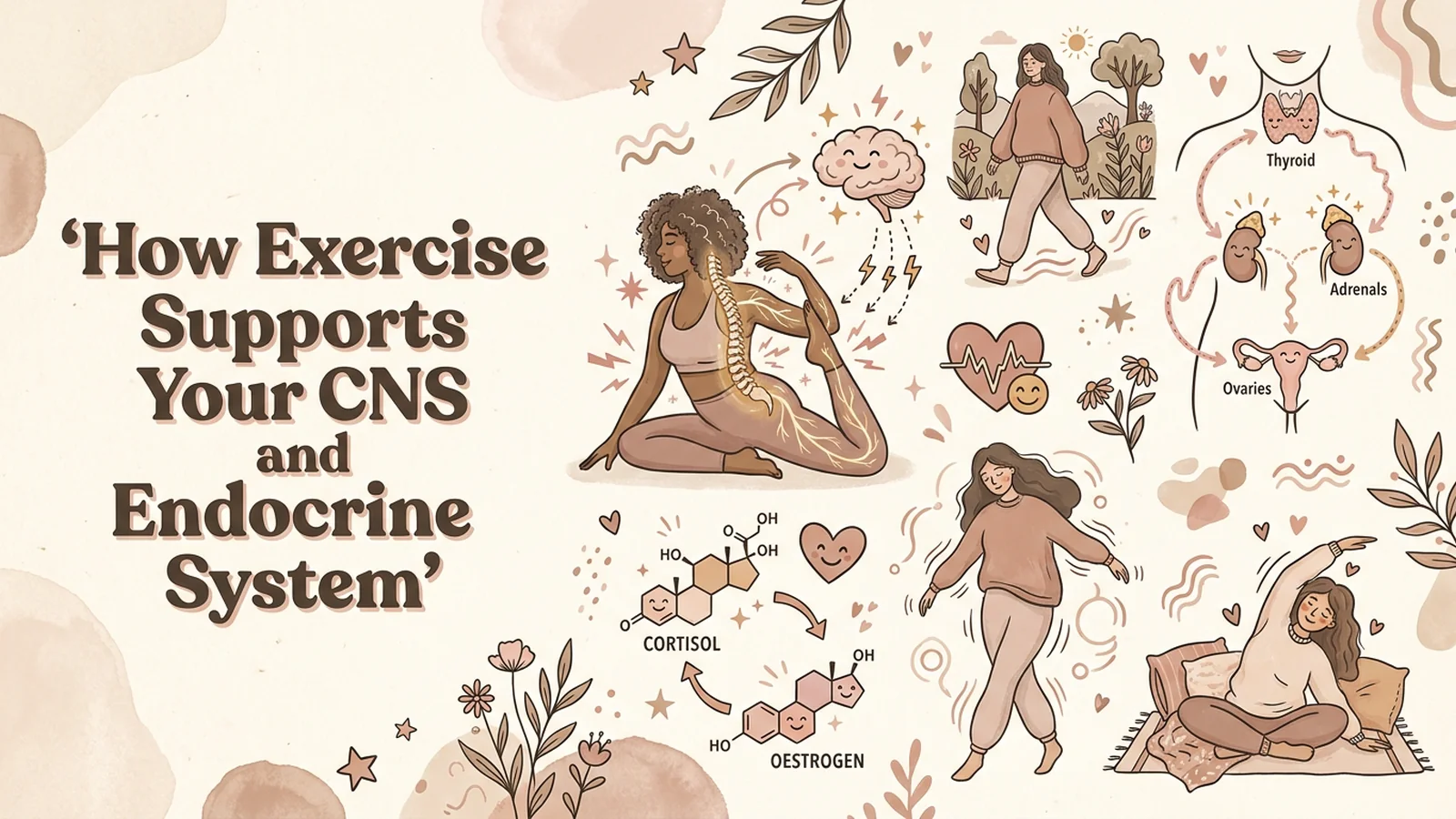
How exercise helps your Nervous & Endocrine System
Central Nervous System and Exercise and Hormones
Every workout affects far more than your muscles. Your brain, spinal cord and hormones constantly adjust your energy, effort, mood and recovery, often before you notice the change.
Understanding the link between your central nervous system, exercise habits, and overall hormone balance can help you train with far more confidence while supporting long-term brain health. You can spot when to push, when to ease off, and why a brisk walk sometimes feels harder than a demanding gym session.
Key Takeaways
- Your central nervous system controls movement, while optimal hormone balance helps manage stress, fuel and tissue repair.
- A temporary rise in adrenaline and cortisol during exercise is normal and useful.
- Sleep, food, hydration and life stress can change how hard the same session feels.
- Regular physical activity enhances cognitive function, mood, sleep quality and long-term brain health.
- Gradual progress and adequate recovery produce better results than constant hard training.
Central nervous system and exercise and hormones: how they work together
Your central nervous system, or CNS, includes your brain and spinal cord. It receives information from your body, decides how much effort a task requires, then sends messages through nerves to your muscles.
Hormones work alongside that system. They are chemical messengers released by glands and organs, including the adrenal glands and pancreas. During physical activity, the sympathetic nervous system and the endocrine system help regulate heart rate, blood glucose, alertness, stress responses and tissue repair.
A hard hill climb, for example, prompts your central nervous system to increase muscle drive. At the same time, the endocrine system releases hormones that make stored energy easier to use. Your breathing, temperature and pulse then feed information back to the brain.
Your response changes with exercise intensity and duration. It also shifts with sleep, nutrition, hydration, age, illness, stress and training history. That is why copying somebody else’s training plan can feel so punishing. Your central nervous system responds to your body, not their fitness tracker.
Movement starts in the motor cortex, an area of the brain that helps plan and send movement signals. Those signals travel down the spinal cord and through nerves to motor units, which pair a nerve cell with the muscle fibres it controls.
As effort rises, molecules such as brain-derived neurotrophic factor cross the blood-brain barrier to support neuroplasticity and synaptic plasticity. Your body recruits more motor units and asks them to fire faster. Yet your brain also monitors heat, pain, oxygen demand and fatigue. If the overall strain becomes too high, it may reduce the drive sent to muscles.
This is called central fatigue. It is a protective response, regulated by the sympathetic nervous system, rather than proof that your body is weak or failing. A review of central and peripheral fatigue describes how fatigue can affect both physical output and cognitive function. Furthermore, specialised transport systems at the blood-brain barrier help manage neural recovery after strenuous exertion.
Why exercise feels harder or easier from one day to the next
Poor sleep can make concentration and coordination feel off. Low carbohydrate intake may leave you flat during longer or harder sessions. Meanwhile, dehydration, illness and work stress can raise perceived effort before your muscles have done much work.
Pay attention to your whole experience. A target pace matters less if you feel unusually breathless, clumsy, irritable or unable to focus. On those days, reduce the load, take longer rests or choose gentle movement.
A difficult session is not always evidence that you need more discipline. It can be useful feedback from your nervous system.

How exercise changes stress, energy and feel-good hormones
Hormone changes during activity are not automatically good or bad. They are short-term responses that help you meet a physical demand. With regular training, your endocrine system often becomes more efficient at handling that demand, supporting overall hormone balance.
A brisk 30-minute walk usually creates a modest stress response. Heavy resistance training or vigorous intervals create a larger one because they require more fuel and alertness. Neither approach wins every time. The right choice depends on your recovery and goal.
Adrenaline and cortisol help you meet a physical challenge
Adrenaline and noradrenaline rise when you start exercising. They increase alertness, heart rate and blood flow to working muscles. You may feel sharper before a sprint, a heavy lift or the final climb of a cycle ride.
Cortisol also rises during demanding exercise. Elevated cortisol levels are a normal part of the body’s acute stress response, helping to release stored energy so you can continue working. Calling cortisol a bad hormone misses its job. You need it for normal stress responses, including training.
Problems can appear when hard training sits on top of constant life stress and too little recovery, potentially leading to hormonal imbalances. Poor sleep, low mood, reduced performance and a loss of enthusiasm can follow. Research discussed by the American Psychological Association notes that exercise briefly activates the stress response, while regular activity can support lower stress over time.
Endorphins and endocannabinoids can improve mood and reduce discomfort
Exercise can affect endorphins and endocannabinoids, chemicals linked with pleasure, calm and reduced discomfort. After a satisfying run, swim or gym session, you may feel lighter and more settled.
The famous runner’s high is less predictable than social media suggests. You may not experience it after every run, and you do not need to chase it. Regular aerobic exercise can lift your mood, help alleviate symptoms associated with mood disorders, and assist in regulating the systemic inflammatory response even when the session feels ordinary.
Regular movement is linked with better mood, sleep and energy. The NHS overview of exercise benefits also highlights its connection with lower stress. However, exercise cannot replace support from a GP or mental health service if low mood, anxiety or distress persists.
Insulin, glucagon and growth-related signals support fuel and repair
Exercise changes how your body handles blood glucose. Insulin helps move glucose from the blood into cells, while glucagon helps release stored fuel when demand rises. Working muscles can take up glucose more effectively during activity, which helps improve insulin sensitivity over time.
Resistance training and high-intensity interval training create local signals that support muscle repair and growth, encouraging myokines release. Hormones play a part, and workouts can stimulate temporary rises in testosterone levels and human growth hormone to support muscle protein growth, but no session creates a permanent hormone surge that transforms your body overnight. Sleep, enough food and adequate protein still set the conditions for repair.
Be cautious with supplements sold as hormone shortcuts. Marketing often exaggerates small or temporary changes. A consistent training programme, regular meals and recovery days will do more for your progress.
The nervous system benefits you can build through regular exercise
Repeated practice teaches your central nervous system how to perform a movement with less wasted effort. It can improve communication between the brain and muscles, while physical activity also supports circulation, synaptic plasticity, and brain signalling.
Evidence suggests exercise supports cognitive function and brain health across adulthood. A review of exercise and central nervous system function describes effects on brain regions involved in learning, mood, and stress responses. While physical activity actively protects against various neurological disorders and neurodegenerative diseases like Alzheimer’s disease, it does not prevent or cure every complex condition. For example, managed rehabilitation routines can help people living with multiple sclerosis maintain mobility. Furthermore, consistent exercise increases grey matter volume, dampens the inflammatory response, and preserves the integrity of the blood-brain barrier.
Training improves movement, balance, and skill
When you begin resistance training, you may get stronger before your muscles visibly grow. Your brain becomes better at recruiting motor units and coordinating the movement, which is boosted by higher levels of brain-derived neurotrophic factor. This is one reason technique practice matters so much in the first weeks.
Different activities challenge different systems. Dancing asks you to respond to rhythm and direction. Swimming requires timing between breathing and strokes. Cycling develops steady leg coordination, while balance work challenges your position sense.
Progress slowly, especially with unfamiliar exercises. Good form gives your central nervous system clear, repeatable signals. Rushing load or speed can turn a useful challenge into a frustrating session.
Regular activity supports mood, sleep, and long-term brain health
Moderate activity can help you discharge tension without draining yourself. It may also support sleep quality, which gives the brain and body time to recover while defending against neurodegenerative diseases and other neurological disorders.
A useful week includes aerobic movement, resistance training, and everyday activity such as walking or taking the stairs. You do not need exhausting workouts to gain benefits. Consistency gives your central nervous system repeated opportunities to adapt, preserving cognitive function and protecting against conditions like Alzheimer’s disease, or helping manage symptoms associated with multiple sclerosis. Staying active is also a powerful strategy for individuals navigating neurodegenerative diseases, as it maintains grey matter volume, supports overall brain health, and slows the progression of certain neurological disorders.
How to exercise for healthier hormone and nervous system responses
The most useful programme matches your current capacity. Build gradually, eat enough and leave room for recovery. The NHS physical activity guidance can help you set a sensible baseline if you are starting or returning after a break through regular physical activity.
Match the workout to your goal and current energy
Moderate aerobic exercise, such as brisk walking or easy cycling, can build fitness without a huge stress load, keeping your stress response and overall hormone balance in check. On the other hand, high-intensity interval training challenges your heart, muscles and nervous system more sharply, so these sessions need more recovery to avoid spikes in cortisol levels.
Resistance training supports strength, movement control and muscle maintenance while promoting healthy testosterone levels and human growth hormone production. Mobility work and gentle recovery sessions may help you stay active when you feel stiff or mentally tired, protecting you from potential hormonal imbalances.
Start with manageable sessions. You might choose aerobic exercise like brisk walking several times a week and do two full-body resistance training sessions with light weights or bodyweight exercises. Then add time, repetitions or load in small steps.
Harder training is not always better for your hormones, nervous system or fitness. Your body improves after training when it has enough time and fuel to recover.
Protect recovery with sleep, food, hydration and rest days
Many adults function well with seven to nine hours of sleep, although individual needs vary. If your sleep worsens as high-intensity interval training rises, treat that pattern as useful information regarding your recovery capacity.
Eat regular meals and avoid arriving at demanding sessions under-fuelled. Carbohydrate supports harder or longer aerobic exercise, while protein supports muscle repair and sustained insulin sensitivity. Drink fluids through the day, then consider extra water when heat, sweat or session length increases your needs.
Watch for persistent soreness, declining performance, unusual fatigue, irritability, poor sleep or a higher resting heart rate. One sign may have a simple cause, but several signs lasting days may mean you need more food, sleep or rest, guarding against deep fatigue and associated mood disorders.

Know when symptoms need medical advice
Stop exercising and seek prompt medical advice for dizziness, fainting, chest pain, new weakness, numbness, severe headache, confusion or unusual breathlessness. NHS 111 can help with urgent advice, while life-threatening symptoms need emergency help through 999 or A&E.
Speak with a GP or qualified healthcare professional before changing your training if you have a neurological condition, diabetes, heart disease, pregnancy, a long-term illness or medicines that affect hormones, especially if you are prone to persistent hormonal imbalances. A tailored plan is safer and more useful than forcing yourself through symptoms.
Frequently Asked Questions
Why does exercise sometimes feel much harder on certain days?
Your perceived effort is heavily influenced by factors outside the gym, such as poor sleep, low hydration, inadequate nutrition, or everyday life stress. These variables affect your central nervous system and can make a standard workout feel remarkably challenging before your muscles have even done much work.
Are adrenaline and cortisol spikes from workouts harmful?
No, temporary increases in adrenaline and cortisol are a normal and essential part of your body’s acute stress response. They help mobilise stored energy, increase alertness, and allow you to meet physical challenges safely, rather than acting as signs of damage.
How can I support my central nervous system and hormone balance through training?
Progress gradually, match your workout intensity to your current energy levels, and prioritise adequate recovery. Eating balanced meals, staying hydrated, and getting seven to nine hours of quality sleep ensure your nervous system and endocrine system can adapt effectively without tipping into chronic fatigue.
A Better Signal From Every Session
Exercise sends messages through your central nervous system and changes hormones involved in effort, fuel, mood, and recovery. Those responses help you meet a challenge, then rebuild afterwards.
By understanding the interplay between your Central Nervous System and Exercise & Hormones, you can build a sustainable routine that respects your body’s limits. Your best results usually come from enjoyable movement, gradual progress, nourishing food, quality sleep, and enough rest. Extreme sessions cannot make up for an exhausted nervous system.
Choose one manageable activity this week, and notice how balanced physical activity provides a clear signal to your central nervous system, driving long-term improvements in energy, mood, and brain health. That feedback is part of your training.

Hormonal Health: Signs you have a Hormonal Imbalance
The Ultimate Guide to Eating and Moving for Your Specific Cycle Phase
Somatic Wisdom vs. The 20-Step Routine
The Luteal Phase: Why do I feel like a different person every three weeks?
Energy Crashes: Understanding Your Body’s Signals
Cycle Syncing: Exercising for Your Cycle to Beat PMS Symptoms
4 Types of PCOS Explained, Symptoms and Causes
How to Support Yourself During the Luteal Phase
Hormonal Health Basics for Women: A Guide
Hormonal Wellbeing: Your Hormonal Happiness
Healthy Habits and Your Hormones: How your everyday habits affect your cycle
Why building Somatic Awareness helps your menstrual cycle
Why Your Nervous System Holds the Key to Hormonal Balance
The Luteal Phase: “I know all this but I can’t move”
An ode to ‘feeling wrecked’ right now
Your Hormones aren’t betraying you
Trauma and Your Hormones: Understanding the Silent Connection
Body Literacy: Let’s stop chasing the ‘perfect’ cycle
The Hormone Powerhouse: A love letter to my liver
My Hormones + Hakomi: The 5 simple principles of Hakomi that overhauled my PCOS
From PCOS to PMOS: A Journey in Understanding my Hormonal Health
Data vs. Soul: What My Toxic Hormone Coach Taught Me About Sovereignty

