Menu

Is Your Luteal Phase Too Short? What to Check
If you have been tracking your fertility, you might be asking yourself how to lengthen the luteal phase naturally. While it is common to look for immediate solutions, the first step is actually gaining a deeper understanding of your menstrual cycle and how it functions as a whole. A short luteal phase is often a point of concern for those trying to conceive, but it is important to separate quick fixes from genuine medical support.
Your luteal phase is the stretch of time between ovulation and your next period. It can vary from cycle to cycle, and one shorter month rarely means there is a problem. However, if you repeatedly have fewer days between confirmed ovulation and bleeding, it is sensible to speak with your GP, especially if you are trying for a pregnancy. A short luteal phase is not proof of infertility, but it can be one useful detail in a wider clinical picture.
Accurate tracking, sensible medical checks and avoiding unproven treatments can give you a much clearer next step.
Key Takeaways
- A typical luteal phase length is usually between 10 and 16 days, though individual cycles often vary.
- If your luteal phase lasts for fewer than 10 days after confirmed ovulation, it may be worth discussing with a GP.
- An ovulation test alone cannot confirm the exact day you ovulated, which is important when tracking the timing of your cycle.
- Treatment focuses on addressing possible underlying causes, rather than forcing your cycle to match a specific target number.
- Seek advice from a healthcare professional sooner if you are 36 or over, have irregular cycles, or have known fertility concerns.
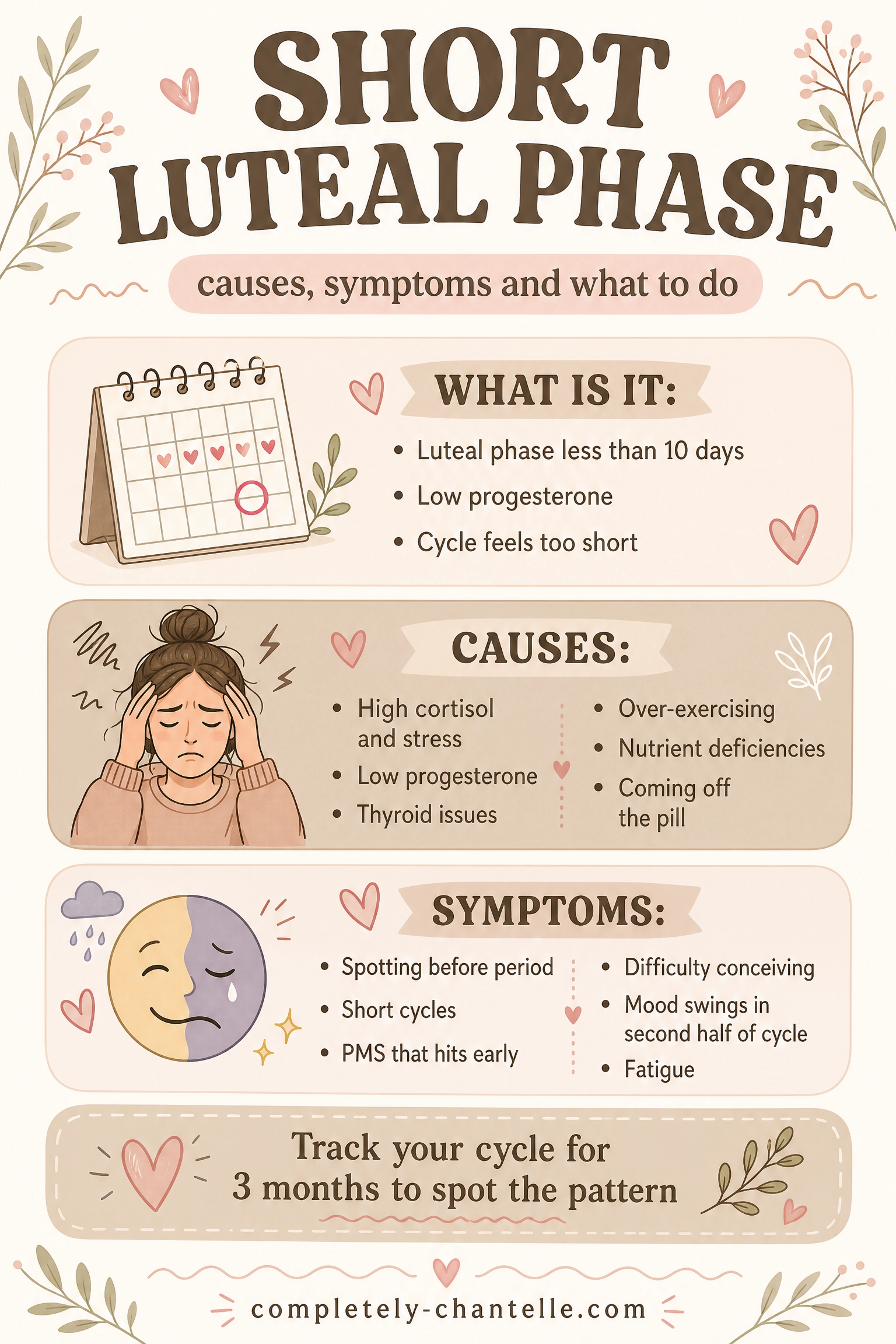
What Is a Luteal Phase, and How Short Is Too Short?
Following ovulation, the empty follicle transforms into a structure called the corpus luteum. This is responsible for progesterone production, which works to thicken the uterine lining and prepare the womb for a potential pregnancy. If pregnancy does not occur, progesterone levels fall and your period begins.
While the follicular phase (the first part of your cycle) can vary in length, the luteal phase is typically more consistent, lasting around 10 to 16 days. Your own pattern may sit outside that range occasionally, particularly after illness, travel, stress, or a disrupted sleep routine.
Clinicians often investigate a phase of fewer than 10 days, particularly when it happens repeatedly. A short luteal phase is sometimes referred to by medical professionals as a luteal phase defect, which may be linked to implantation failure. Still, there is no universally agreed cut-off and no perfect test you can do at home. A short phase does not automatically mean your progesterone is too low or that you cannot conceive.
The timing matters because implantation usually occurs several days after ovulation. Yet fertility depends on far more than luteal phase length, including whether ovulation occurs, sperm health, fallopian tube health, and the condition of the womb. The NHS explains how ovulation fits into the menstrual cycle and why cycle timing can vary.
A repeated pattern is more useful than a single unusual cycle.
How to Calculate Your Luteal Phase Accurately
Count from the day after confirmed ovulation to the day before your next period starts. For example, if ovulation occurred on day 14 and your period begins on day 25, your luteal phase is 10 days.
Reliable ovulation tracking is essential, as an LH surge on a urine test is helpful but does not prove ovulation happened that day. LH often rises before ovulation, and the interval can vary. Period-tracking apps also estimate ovulation based on past cycles, so treat their dates as clues rather than facts.
You can build a more reliable picture by combining methods:
- Use LH tests to spot your surge, then record basal body temperature each morning before getting up.
- Watch for cervical mucus that becomes clear, slippery, and stretchy before ovulation.
- Ask a fertility professional for help if your signs are unclear or your cycles are irregular.
A sustained temperature rise can support that ovulation has occurred, although it confirms it after the event. Track two or three cycles before drawing conclusions.
Signs That Your Luteal Phase May Need Checking
You may want advice if you repeatedly record fewer than 10 days between likely ovulation and your period. Spotting for several days before bleeding can also be worth mentioning, especially if it is new for you.
Difficulty confirming ovulation, very irregular cycles, or trouble conceiving are other reasons to book an appointment. Premenstrual symptoms, spotting, or total cycle length cannot diagnose a luteal phase issue on their own.
One unusual month is common. A pattern across several cycles gives your GP much more useful information.

Why Might Your Luteal Phase Be Short?
Sometimes, what looks like a short luteal phase is simply uncertainty regarding the exact day of ovulation. Ovulation may have occurred later than a tracking app predicted, or an LH surge might not have successfully triggered ovulation during that specific cycle.
Hormone balance is essential for a healthy cycle, and various factors can disrupt this delicate equilibrium. Conditions such as thyroid dysfunction, elevated prolactin, and PCOS can interfere with the ovulation process. Furthermore, high cortisol levels stemming from chronic stress can disrupt the regularity of the menstrual cycle. It is also important to remember that the quality of the corpus luteum often depends on the health of the preceding follicular phase, as this structure is responsible for producing the progesterone levels needed to sustain a pregnancy. Perimenopause can bring shifting cycle lengths, while endometriosis may affect fertility through different pathways.
Stress, under-fuelling, intense physical training, recent weight changes, and acute illness can all influence reproductive hormones. Some medicines may also play a role, and age-related hormonal variation becomes more common over time.
None of these factors confirms a cause in your specific case. A London fertility clinic’s overview of a short luteal phasemakes a practical point: the wider history of your cycle matters more than any single number.
What a GP or Fertility Clinic May Check
Your appointment will usually begin with a review of your cycle history, general health, medicines, and any supplements. Your GP may ask about weight changes, exercise, headaches, nipple discharge, acne, hair growth, pelvic pain, or symptoms of thyroid disease.
Depending on your situation, they may arrange a pregnancy test, blood tests, or an ultrasound scan. Blood testing can assess thyroid function, prolactin, and other hormones when your symptoms or cycle patterns suggest a need.
A blood test to check progesterone levels may be useful when timed appropriately, but one result cannot tell the whole story. Hormone levels change throughout the day and across the cycle. Bring several months of dates, test results, and symptoms to your appointment so the discussion starts with real patterns rather than guesswork.
How to lengthen the luteal phase safely and what really helps
When you search for ways to lengthen the luteal phase, you will find plenty of firm promises online. However, there is no reliable home method that can lengthen every short phase, because the correct approach always depends on the underlying cause.
Start with the basics that support regular ovulation. Eat regular meals and ensure you are consuming enough food for your activity level. If you exercise intensely, review whether your training load and recovery leave you exhausted or cause unintentional weight loss. Aim for consistent sleep and seek professional support if stress feels constant or overwhelming. Managing stress is a vital component for anyone who is trying to conceive, as high cortisol levels can interfere with your reproductive hormone balance.
These lifestyle changes support general reproductive health, but they are not a guaranteed fix. You should not blame yourself for a cycle pattern that may have a medical cause. If testing identifies a thyroid condition or raised prolactin, treating it may improve ovulation. Your clinician might also review any medication that affects your cycle. In selected situations, a fertility specialist may offer specific treatment to support ovulation or prescribe progesterone after ovulation.
What is the fastest way to increase luteal phase length?
It is important to understand that there is no instant or fast way to lengthen your luteal phase. The only way to address the issue quickly and safely is through professional fertility treatment, which first requires an accurate diagnosis. While there is no single superfood that will provide an immediate result, eating a balanced diet rich in antioxidants and healthy fats can provide the necessary building blocks for better progesterone production.
Treatments Your Clinician May Discuss When You Are Trying to Conceive
Your clinical plan depends on whether you ovulate, your medical history, and how long you have been trying. Managing an endocrine condition is often the first step. In other cases, a clinician may review your current medication, offer ovulation induction treatment, or discuss progesterone support after ovulation.
Fertility care should always remain individual. A clinic may also assess semen quality and the patency of your fallopian tubes. Focusing only on luteal phase length can sometimes cause you to miss other treatable factors. The IVF London guide to short luteal phases also highlights the role of progesterone, but your clinician should always interpret hormone results alongside your cycle history and fertility assessment.

Frequently Asked Questions
Can I fix a short luteal phase with vitamins or herbs?
While many supplements are marketed for fertility, there is no strong clinical evidence that they reliably lengthen the luteal phase. Herbal products and high-dose vitamins can also interact with medications or cause side effects, so always speak with your GP before starting any new regimen.
Does a short luteal phase mean I am infertile?
No, a short luteal phase does not automatically mean you cannot conceive. It is simply one piece of information that may be relevant to your fertility journey, and many people with varying cycle lengths go on to have healthy pregnancies.
How many cycles should I track before seeing a doctor?
It is generally helpful to track at least two or three consecutive cycles to establish a clear pattern rather than relying on a single month’s data. If you are 36 or older, or have other known fertility concerns, it is advisable to seek professional advice sooner.
Why does my period tracking app suggest my luteal phase is short?
Tracking apps often estimate ovulation dates based on averages rather than your actual biology. Since these apps do not measure your real-time hormonal changes, they may incorrectly label a cycle as having a short luteal phase when your ovulation simply occurred later than predicted.
A Short Luteal Phase Deserves Context, Not Panic
A short luteal phase of under 10 days following confirmed ovulation may deserve assessment if it happens repeatedly. Yet, a single cycle does not necessarily indicate a fertility problem or an issue with your progesterone levels.
It is important to remember that luteal phase length is just one piece of the puzzle within your broader menstrual cycle. Rather than worrying about a single measurement, focus on consistent ovulation tracking. Avoid self-treating with unproven products and instead take your detailed records to a GP or fertility specialist. Many causes of cycle disruption are manageable, and a professional assessment provides a much clearer path forward than simply chasing a number alone.

Hormonal Health: Signs you have a Hormonal Imbalance
The Ultimate Guide to Eating and Moving for Your Specific Cycle Phase
Somatic Wisdom vs. The 20-Step Routine
The Luteal Phase: Why do I feel like a different person every three weeks?
Energy Crashes: Understanding Your Body’s Signals
Cycle Syncing: Exercising for Your Cycle to Beat PMS Symptoms
4 Types of PCOS Explained, Symptoms and Causes
How to Support Yourself During the Luteal Phase
Hormonal Health Basics for Women: A Guide
Hormonal Wellbeing: Your Hormonal Happiness
Healthy Habits and Your Hormones: How your everyday habits affect your cycle
Why building Somatic Awareness helps your menstrual cycle
Why Your Nervous System Holds the Key to Hormonal Balance
The Luteal Phase: “I know all this but I can’t move”
An ode to ‘feeling wrecked’ right now
Your Hormones aren’t betraying you
Trauma and Your Hormones: Understanding the Silent Connection
Body Literacy: Let’s stop chasing the ‘perfect’ cycle
The Hormone Powerhouse: A love letter to my liver
My Hormones + Hakomi: The 5 simple principles of Hakomi that overhauled my PCOS
From PCOS to PMOS: A Journey in Understanding my Hormonal Health
Data vs. Soul: What My Toxic Hormone Coach Taught Me About Sovereignty

