Menu

Seed Cycling PCOS: A Practical, Evidence-Led Guide
Irregular periods, persistent acne, unwanted hair growth, and stubborn weight changes caused by hormonal imbalance can make living with the condition feel exhausting. When you are trying to support your body, simple food habits can feel more manageable than another complicated plan.
Seed cycling for PCOS involves eating particular seeds during different parts of your menstrual cycle. By incorporating flax, pumpkin, sesame, and sunflower seeds, this routine aims to support your body as it works to balance estrogen levels and progesterone levels naturally. While it is a nourishing practice for those navigating polycystic ovary syndrome, it is not a cure or a replacement for medical care. You can use it alongside treatment, balanced meals, movement, and advice from your GP.
Before adding seeds to your routine, it helps to understand the method, its limits, and how to adapt it when your cycle is unpredictable.
Key Takeaways
- Seed cycling involves consuming flax seeds, pumpkin seeds, sunflower seeds, and sesame seeds in a repeating two-part pattern.
- These seeds add fibre, healthy fats, minerals, and plant compounds to your diet, providing essential nutrients that support your overall reproductive health.
- Research on seed cycling itself for PCOS is currently limited, so it is best to avoid expecting it to regulate your hormones entirely on its own.
- You can follow a 28-day calendar pattern if you experience irregular periods or do not ovulate consistently.
- Start your routine gradually, especially if you are not accustomed to high-fibre foods or if you have a known seed allergy.
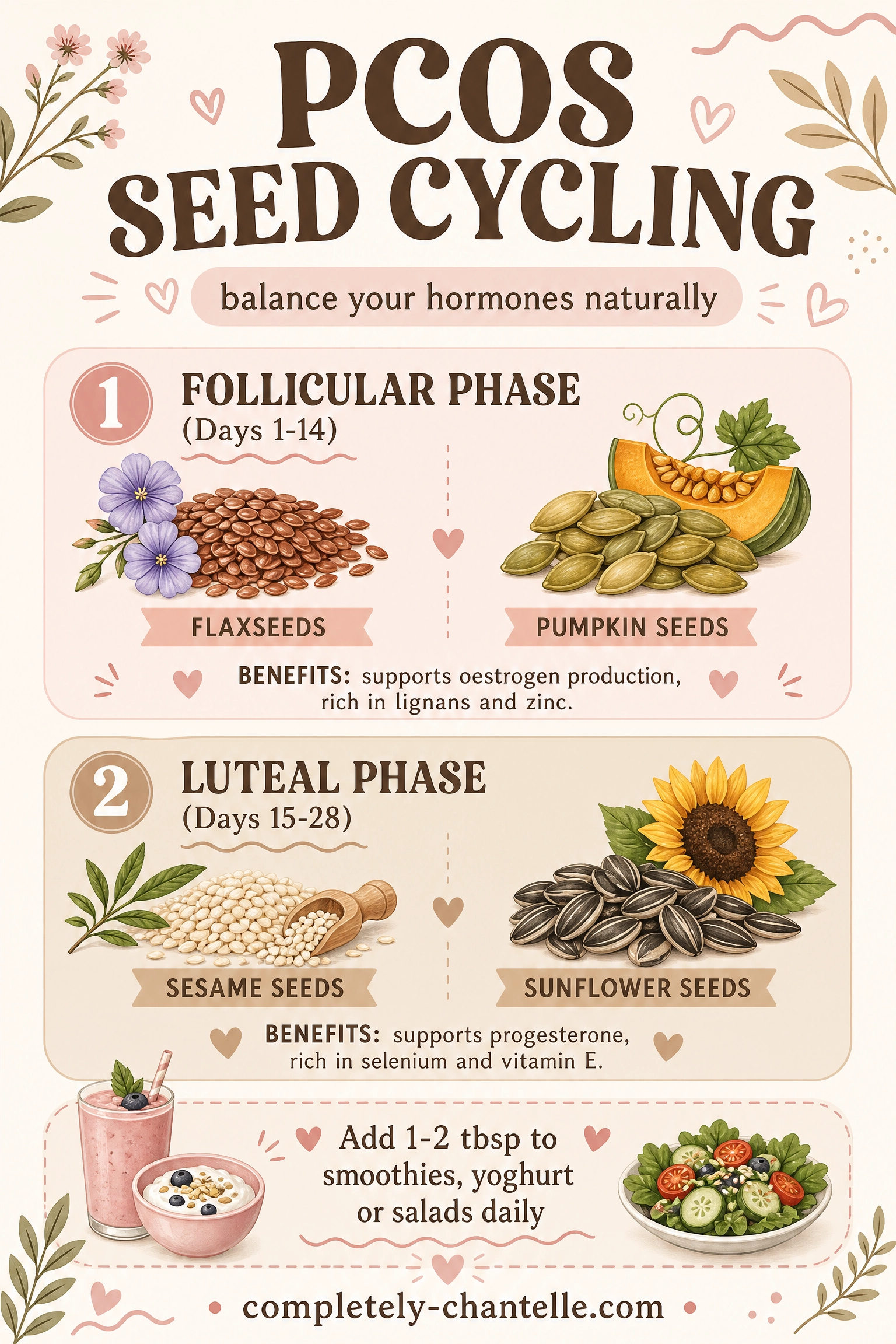
What Seed Cycling Means for PCOS
Seed cycling is a food-based practice that matches four specific seeds with the two broad phases of a menstrual cycle. During the first half, you eat flax and pumpkin seeds. During the second half, you switch to sunflower and sesame seeds. The follicular phase focuses on supporting estrogen levels, while the luteal phase is intended to support progesterone levels and overall hormone production.
The typical schedule looks like this:
| Cycle phase | Typical timing | Seeds | Daily amount |
|---|---|---|---|
| Follicular phase | Day 1 to ovulation | Ground flaxseed and pumpkin seeds | 1 tablespoon of each |
| Luteal phase | Ovulation to your next period | Sunflower seeds and sesame seeds | 1 tablespoon of each |
Your follicular phase begins on the first day of full menstrual bleeding. Ovulation often occurs around the middle of a typical cycle, although PCOS can make that timing much harder to identify.
Flax seeds are a rich source of fibre, lignans, and omega-3 fatty acids. Pumpkin seeds provide magnesium, zinc, protein, and unsaturated fats. Sesame and sunflower seeds also supply fibre and essential minerals, including selenium and vitamin E.
These nutrients can support a varied PCOS-friendly diet. However, assigning each seed a specific hormone-balancing role is where the claims become less certain. The popular seed-pairing method is based more on wellness tradition than strong clinical evidence.
If the routine makes breakfast feel more satisfying or helps you eat more whole foods, that is a useful result. You do not need to believe that every tablespoon changes your hormone levels for the practice to be a positive addition to your lifestyle.
What the Evidence Says About Seed Cycling
There is a clear difference between the general health benefits of eating seeds and the specific practice of seed cycling. Seeds are highly nutritious, and diets rich in fibre, unsaturated fats, vegetables, and pulses can help manage insulin resistance in those living with polycystic ovary syndrome. Incorporating seeds provides beneficial lignans, which support metabolic health and general wellbeing.
Yet, there are no large, high-quality trials proving that cycling seeds by menstrual phase effectively regulates estrogen levels or progesterone levels. While you may see dramatic claims online regarding how this practice cures a hormonal imbalance, they deserve a degree of caution. Although restoring ovulation is a primary goal for many, there is limited clinical evidence that seed cycling is the mechanism to achieve it.
One small study discussed in a 2023 review of seed cycling as an adjunct therapy for PCOS reported improvements in ovarian features and hormone measures. However, that does not prove the routine will work for everyone. Study size, design, diet changes, medication use, and the natural variation of symptoms all affect results.
Seed cycling can be a supportive food habit, but it should not delay evidence-based treatment for irregular periods, fertility concerns, or metabolic risks.
PCOS requires individual care. For some people, this includes blood tests, acne treatment, support for insulin resistance, or hormonal medication to protect the lining of the womb when periods are infrequent.
The NHS guidance on polycystic ovary syndrome recommends speaking with a GP if you have symptoms or irregular periods. If you go more than three to four months without bleeding, do not rely on seed cycling to solve it. Contact your GP surgery.
How to Try Seed Cycling With PCOS
You do not need expensive powders, pre-packed kits, or perfectly timed ovulation tests. Simply buy plain, unsalted seeds and keep them in airtight containers. Ground flax seeds are the most practical choice because your body absorbs the nutrients more easily than whole seeds. Notably, flax seeds are rich in omega-3 fatty acids, which play a significant role in supporting reproductive health.
Use this simple pattern for one or two cycles:
- Start on day one of your period with 1 tablespoon of ground flax seeds and 1 tablespoon of pumpkin seeds daily.
- When you believe you have ovulated, change to 1 tablespoon of sunflower seeds and 1 tablespoon of sesame seeds daily.
- Continue the second pair until your next period begins, then return to flax seeds and pumpkin seeds.
You can stir these seeds into porridge, Greek yoghurt, overnight oats, soups, salads, or a smoothie. Toasted pumpkin seeds and sunflower seeds work well scattered over roasted vegetables. Ground sesame seeds, often sold as tahini, can also fit the luteal phase, although it is easy to eat a larger portion than intended.
Keep portions realistic. Four tablespoons of seeds across a day can add substantial energy, so use them as part of a meal rather than an extra snack on top of your usual intake. You do not need to cut out carbohydrates or follow a restrictive diet to make seed cycling work. Remember that consistent nutrition supports overall hormone production and helps manage the menstrual cycle alongside your prescribed medical treatment.
A practical overview of seed cycling for PCOS also highlights that this practice works best as one part of broader PCOS care. Consistent meals, adequate protein, sleep, stress management, and prescribed treatment usually have a greater effect than the timing of seeds.
How to Follow the Routine With Irregular Periods
Polycystic ovary syndrome often brings delayed or absent ovulation, making it difficult to identify the exact middle of your menstrual cycle. Consequently, trying to align your intake with your body can turn seed cycling into a stressful task. A calendar based approach is often much easier to manage.
Choose a repeating 28 day schedule to mimic typical hormone patterns. Consume flax and pumpkin seeds for days 1 to 14 to support healthy estrogen levels, then switch to sunflower and sesame seeds for days 15 to 28 to encourage balanced progesterone levels. Start your next round immediately after day 28, even if your period has not arrived.
This method does not perfectly reflect your individual hormone fluctuations; instead, it provides a consistent, stress free way to include these nutrient dense foods in your diet. If you prefer, you can later track ovulation through methods like monitoring cervical mucus changes, basal body temperature, or using ovulation tests, and adjust your seed intake based on that data.
Remember that with polycystic ovary syndrome, periods can still arrive early, late, or not at all. That does not mean you have failed or chosen the wrong seeds. The condition is influenced by many complex factors, and a simple seed routine cannot regulate every physiological process.
If you are trying to conceive, speak to your GP or a fertility specialist as early as possible. Because irregular ovulation can make timing a challenge, you may benefit from professional treatment that supports your fertility and ovulation cycles rather than relying on dietary changes alone.
Make the Habit Safe and Sustainable
Seeds are ordinary foods, but they can still cause issues for some people. Increase your intake slowly if you currently eat little fibre. Otherwise, bloating, wind, or changes in bowel habits can make you abandon the routine before it feels comfortable. When making these dietary changes to support your health, including managing insulin resistance, remember that small, consistent steps are often more effective than rapid transitions.
Seeds are also an excellent source of essential minerals like zinc and selenium, which provide a safer, natural way to support your body compared to high-dose supplements.
Drink water regularly, particularly when adding ground flax seeds to your diet. If you have irritable bowel syndrome, a digestive condition, or a history of bowel narrowing, ask a GP or registered dietitian before increasing fibre sharply.
Check for practical concerns as well:
- Avoid any seed that causes itching, swelling, wheezing, or stomach pain. Seek urgent medical help for signs of a severe allergic reaction.
- Take prescribed medicines as directed. Ask your pharmacist whether high-fibre foods need to be spaced away from a specific medicine.
- Store ground flax seeds in the fridge or freezer after opening, because their natural oils can spoil quickly.
- Choose unsalted seeds when possible, especially if you are watching your blood pressure.
You may also find that daily tracking makes you feel anxious. In that case, simplify the habit. Add a spoonful of mixed seeds to breakfast most days and focus on consistency rather than cycle timing.
PCOS care should feel supportive, not like another strict rulebook. The most helpful routine is one you can maintain without guilt.

Frequently Asked Questions
Can I still seed cycle if I have irregular periods or no period at all?
Yes, you can use a fixed 28-day calendar pattern to provide structure to your routine. Simply start with flax and pumpkin seeds for the first 14 days, then switch to sunflower and sesame seeds for the remainder of the month, starting a new cycle immediately after day 28.
Should I use whole seeds or ground seeds for the best results?
Ground seeds are generally recommended because they are easier for your body to digest and absorb. If you purchase whole seeds, you can quickly pulse them in a clean coffee grinder or food processor; just ensure you store them in the fridge or freezer to keep the healthy oils from spoiling.
Does seed cycling replace my PCOS medication or GP-led treatment?
No, seed cycling is a food-based habit that should be used alongside not instead of medical advice. While seeds provide helpful nutrients, they cannot substitute for clinical interventions required for managing insulin resistance, fertility concerns, or long periods without menstruation.
What should I do if I notice digestive discomfort after starting this routine?
If you are not used to high-fibre foods, you may experience bloating or changes in bowel habits when first introducing seeds. Try starting with smaller portions and increasing your water intake to help your digestive system adjust more comfortably.

A Supportive Place for Seeds in PCOS Care
Seed cycling can bring colour, texture, fibre, and variety to your meals. It may also give you a small daily ritual when PCOS feels unpredictable. Those are worthwhile reasons to try it.
Still, it is important to remember that seed cycling is supportive, not curative. While it cannot fix a hormonal imbalance on its own, it can be a gentle way to support your menstrual cycle and overall reproductive health. By providing key nutrients, it may help you navigate the broader picture of your hormone levels, including balancing estrogen levels and progesterone levels.
Pay attention to how you feel, keep expectations grounded, and seek medical advice for persistent symptoms or long gaps between periods. A steady routine can help, but you deserve care that reaches beyond the contents of your breakfast bowl. Ultimately, seed cycling PCOS is best used as one small, nourishing tool within a more comprehensive approach to your wellbeing.

Hormonal Health: Signs you have a Hormonal Imbalance
The Ultimate Guide to Eating and Moving for Your Specific Cycle Phase
Somatic Wisdom vs. The 20-Step Routine
The Luteal Phase: Why do I feel like a different person every three weeks?
Energy Crashes: Understanding Your Body’s Signals
Cycle Syncing: Exercising for Your Cycle to Beat PMS Symptoms
4 Types of PCOS Explained, Symptoms and Causes
How to Support Yourself During the Luteal Phase
Hormonal Health Basics for Women: A Guide
Hormonal Wellbeing: Your Hormonal Happiness
Healthy Habits and Your Hormones: How your everyday habits affect your cycle
Why building Somatic Awareness helps your menstrual cycle
Why Your Nervous System Holds the Key to Hormonal Balance
The Luteal Phase: “I know all this but I can’t move”
An ode to ‘feeling wrecked’ right now
Your Hormones aren’t betraying you
Trauma and Your Hormones: Understanding the Silent Connection
Body Literacy: Let’s stop chasing the ‘perfect’ cycle
The Hormone Powerhouse: A love letter to my liver
My Hormones + Hakomi: The 5 simple principles of Hakomi that overhauled my PCOS
From PCOS to PMOS: A Journey in Understanding my Hormonal Health
Data vs. Soul: What My Toxic Hormone Coach Taught Me About Sovereignty

