Luteal Cycle Fatigue: Causes, Clues and Relief
Feeling unusually tired after ovulation can be frustrating, especially when an early night does not seem to help. While experiencing luteal cycle fatigue is common as your hormones shift during the various menstrual cycle phases, your period should not become the automatic explanation for every spell of exhaustion.
A predictable dip in energy caused by hormonal energy fluctuations may be manageable. However, tiredness that is new, severe, or disruptive deserves a closer look. You can spot useful patterns, make practical changes, and know when it is time to speak to your GP.
Key Takeaways
- The luteal phase begins immediately after ovulation and concludes when your next period starts, marking the second half of your menstrual cycle phases.
- Significant shifts in hormones between this time and the earlier follicular phase can influence your energy, sleep, appetite, and general premenstrual syndrome symptoms.
- Beyond hormonal changes, factors such as poor sleep hygiene, chronic stress, and iron deficiency anaemia can also trigger persistent fatigue.
- It is recommended to track your symptoms carefully for two or three cycles before assuming that hormonal fluctuations are the sole cause of your exhaustion.
- Consult your GP if your level of fatigue significantly impacts your daily life, progressively worsens, or is accompanied by other concerning warning signs.
What Luteal Phase Fatigue Feels Like and When It Starts
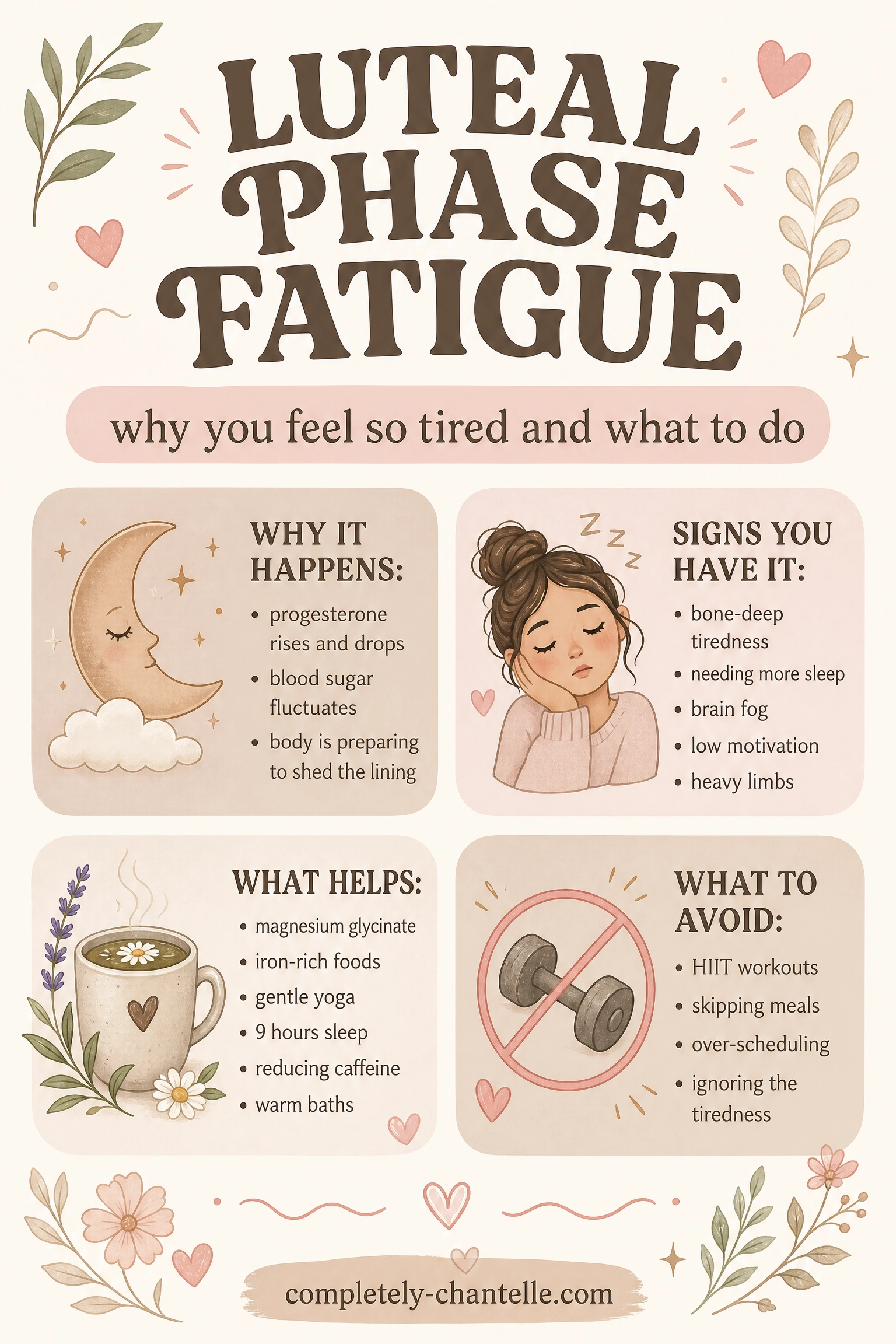
The luteal phase is the second of the four menstrual cycle phases. It follows the follicular phase, beginning immediately after ovulation and finishing when your next period starts. For many people, it lasts around 12 to 14 days, although individual ovulation timing means that total cycle length varies.
You may feel a drop in energy soon after ovulation. For others, fatigue peaks during the final week before their period. You might want more sleep, struggle to focus at work or feel as though your usual workout takes twice the effort.
Common experiences include brain fog, lower motivation, mood swings, irritability, stronger food cravings and reduced exercise tolerance. These symptoms are often linked to estrogen fluctuations as your body prepares for the next cycle. You may also feel sleepy in the afternoon despite getting what seems like enough sleep overnight. A guide to common luteal phase symptoms can help you compare your own timing, but your experience may not match anyone else’s exactly.
Mild shifts in energy can be part of a normal cycle. Still, fatigue that affects work, relationships, driving, parenting or basic daily tasks needs attention. You deserve more than simply pushing through every month.
Why Luteal Cycle Fatigue Can Happen
After ovulation, progesterone levels rise and then fall if pregnancy does not occur. Oestrogen fluctuations also occur during this part of the cycle. These shifts may affect sleep, mood, appetite and perceived energy, although they do not affect everyone in the same way.
Progesterone levels can raise your basal body temperature slightly after ovulation. If you already sleep lightly or wake often, feeling warmer at night may make sleep less refreshing. In addition, stronger appetite or irregular meals can leave you feeling drained when blood sugar rises and falls sharply. Prioritising blood sugar stabilization through consistent, balanced meals can often help manage these energy dips.
Your cycle may be part of the picture, but it may not be the whole story. Low energy can also relate to:
- iron-deficiency anaemia after heavy periods
- thyroid dysfunction or poor-quality sleep
- stress, low mood, anxiety or under-fuelling
- fluctuating serotonin levels
- pregnancy, especially if a period is late or unusual
- insulin resistance
- premenstrual syndrome symptoms or premenstrual dysphoric disorder
If you are skipping meals, training hard or sleeping poorly, the luteal phase can expose an energy shortfall that is present all month. A sudden change in fatigue needs the same care as any other new symptom.
How Premenstrual Syndrome Symptoms and PMDD May Differ From Typical Cycle Changes
Premenstrual syndrome symptoms cause physical and emotional challenges in the weeks before a period. The NHS guide to PMS includes tiredness, sleep problems, mood changes, irritability and bloating among its common symptoms.
Premenstrual syndrome symptoms become more concerning when they repeatedly disrupt your job, home life or relationships. Premenstrual dysphoric disorder is a more severe condition that can include intense low mood, mood swings, anxiety, anger or hopelessness alongside physical symptoms. The pattern matters most. One difficult month does not confirm a diagnosis, but repeated symptoms across several cycles give your GP useful information.
Severe premenstrual mood symptoms are medical symptoms, not a personal failing.
How to Find Out What Is Causing Your Fatigue
A simple symptom diary can turn a vague monthly slump into a clear pattern. Track the first day of each period and note your estimated ovulation timing. Then record your energy, sleep, mood, bleeding, pain, food intake, exercise and any medicines.
Do this for at least two or three cycles. Write down the details that change your day, such as needing a nap, waking at 3 am, cancelling plans or finding stairs unusually difficult. Cycle-tracking apps can estimate fertile days, but they cannot prove what causes your tiredness.
It can also help to compare your experience with a broader overview of energy changes through the various menstrual cycle phases. Use it as a prompt for observation, rather than a diagnosis.
At an appointment, your GP may ask about your periods, diet, sleep, mental health, pregnancy risk and medical history. Depending on your symptoms, they may consider tests such as a full blood count, ferritin or thyroid function tests to rule out issues like iron deficiency anemia. Take your diary with you. It gives your GP a much clearer starting point than trying to remember several months at once.
Avoid high-dose iron, hormone products or multiple supplements without medical advice. Iron can be harmful in excess, and supplements can interact with medicines or mask the real cause.
Signs You Should Arrange a GP Appointment
Book a GP appointment if fatigue lasts beyond the luteal phase, gets worse over time or starts suddenly. You should also seek advice if it stops you doing normal activities or follows very heavy, prolonged or painful periods.
Other warning signs include breathlessness, dizziness, heart palpitations, unexpected weight change, feeling unusually cold, fever, persistent low mood or sleep disturbances that do not improve. These symptoms do not automatically mean something serious, but they need proper assessment.
Seek urgent help for chest pain, severe breathing difficulty, fainting, unusually heavy bleeding or thoughts of suicide. Your GP surgery can advise on routine concerns. A pharmacist can help with general medicine questions, NHS 111 can guide urgent decisions, and A&E is appropriate for emergencies.
Simple Ways to Manage Luteal Phase Fatigue
You cannot always prevent a premenstrual energy dip, but implementing specific lifestyle modifications can make the week easier. Start with healthy sleep habits; keep a regular bedtime and wake time where possible, and make the bedroom cool and dark. If late caffeine leaves you wired at bedtime, move your last coffee or tea earlier. Addressing sleep disturbances early is essential to maintaining your rest quality throughout the month.
Food matters too. Achieving blood sugar stabilization through regular meals with protein, fibre and slow-release carbohydrates can feel steadier than relying on sugary snacks. Include iron-rich foods such as beans, lentils, eggs, meat, fortified cereals and leafy greens. When addressing potential micronutrient deficiencies, pair plant-based iron sources with vitamin C-rich foods, such as peppers or oranges, to improve absorption. Some individuals also find that magnesium supplements help support nerve function and relaxation during this time.
Gentle movement can lift energy and mood, even when a hard workout feels unrealistic. A walk, easy cycle, stretching session or low-intensity exercise still counts. You do not need to stop exercising during the luteal phase, but swapping a high-impact session for low-intensity exercise is a sensible form of stress management.
Make the lower-energy days less demanding where you can. Prepare easy meals, keep a water bottle nearby, share household jobs and avoid stacking every difficult task into the same week. Reducing alcohol may also help minimise sleep disturbances, while consistent stress management can help you navigate the week with more ease.
For significant PMS or PMDD, a GP may discuss treatment options. Depending on your health and preferences, these can include a combined hormonal contraceptive, an SSRI or other support.
How to Make a Personal Plan for the Week Before Your Period
Use your symptom diary to identify the days when energy usually drops as your body responds to shifting progesterone levels. Then, protect those days in advance to better manage your hormonal energy fluctuations.
- Keep your bedtime consistent and plan for enough sleep.
- Stock simple, nourishing meals and snacks before your low-energy days arrive.
- Choose lighter exercise and build in rest without guilt.
- Move non-urgent tasks where possible, and tell trusted people what support would help.
- Review the plan after each cycle and keep the changes that genuinely work.
Self-care can make the luteal phase easier. It should not replace medical assessment when your tiredness is severe, unexplained or worsening.
Frequently Asked Questions
How long should I track my symptoms before visiting a GP?
It is generally recommended that you track your symptoms for at least two or three full menstrual cycles. This provides a clear, documented pattern of your energy levels, sleep quality, and mood that will help your GP provide a more accurate assessment.
Can diet changes really help with luteal phase fatigue?
Yes, focusing on blood sugar stabilisation through consistent, balanced meals containing protein, fibre, and complex carbohydrates can prevent energy crashes. Additionally, incorporating iron-rich foods and ensuring adequate hydration can support your body’s needs during this hormonally active phase.
When does luteal phase fatigue typically occur?
This type of fatigue generally begins immediately after ovulation and continues until your next period starts. While the timing can vary between individuals, most people experience the most significant drop in energy levels during the final week of their cycle.
A Clearer Path Through Monthly Fatigue
Fatigue after ovulation can be a normal part of hormonal shifts, but persistent exhaustion may indicate deeper underlying issues. Tracking your wellbeing across different menstrual cycle phases for two or three months provides practical evidence to share with your healthcare provider. In the meantime, prioritising consistent sleep, balanced nutrition, and gentle movement can help sustain your energy levels.
If this exhaustion begins to interfere with your daily life or presents alongside other premenstrual syndrome symptoms, it is worth booking an appointment with your GP. Identifying a clear pattern allows you to seek professional support and effective treatment options, helping you gain a better understanding of luteal cycle fatigue rather than leaving you to guess the cause of your monthly energy dips.

Hormonal Health: Signs you have a Hormonal Imbalance
The Ultimate Guide to Eating and Moving for Your Specific Cycle Phase
Somatic Wisdom vs. The 20-Step Routine
The Luteal Phase: Why do I feel like a different person every three weeks?
Energy Crashes: Understanding Your Body’s Signals
Cycle Syncing: Exercising for Your Cycle to Beat PMS Symptoms
4 Types of PCOS Explained, Symptoms and Causes
How to Support Yourself During the Luteal Phase
Hormonal Health Basics for Women: A Guide
Hormonal Wellbeing: Your Hormonal Happiness
Healthy Habits and Your Hormones: How your everyday habits affect your cycle
Why building Somatic Awareness helps your menstrual cycle
Why Your Nervous System Holds the Key to Hormonal Balance
The Luteal Phase: “I know all this but I can’t move”
An ode to ‘feeling wrecked’ right now
Hormones in the High-Stress Era
Your Hormones aren’t betraying you
Trauma and Your Hormones: Understanding the Silent Connection
Body Literacy: Let’s stop chasing the ‘perfect’ cycle
The Hormone Powerhouse: A love letter to my liver
My Hormones + Hakomi: The 5 simple principles of Hakomi that overhauled my PCOS
From PCOS to PMOS: A Journey in Understanding my Hormonal Health
Data vs. Soul: What My Toxic Hormone Coach Taught Me About Sovereignty

