Menu
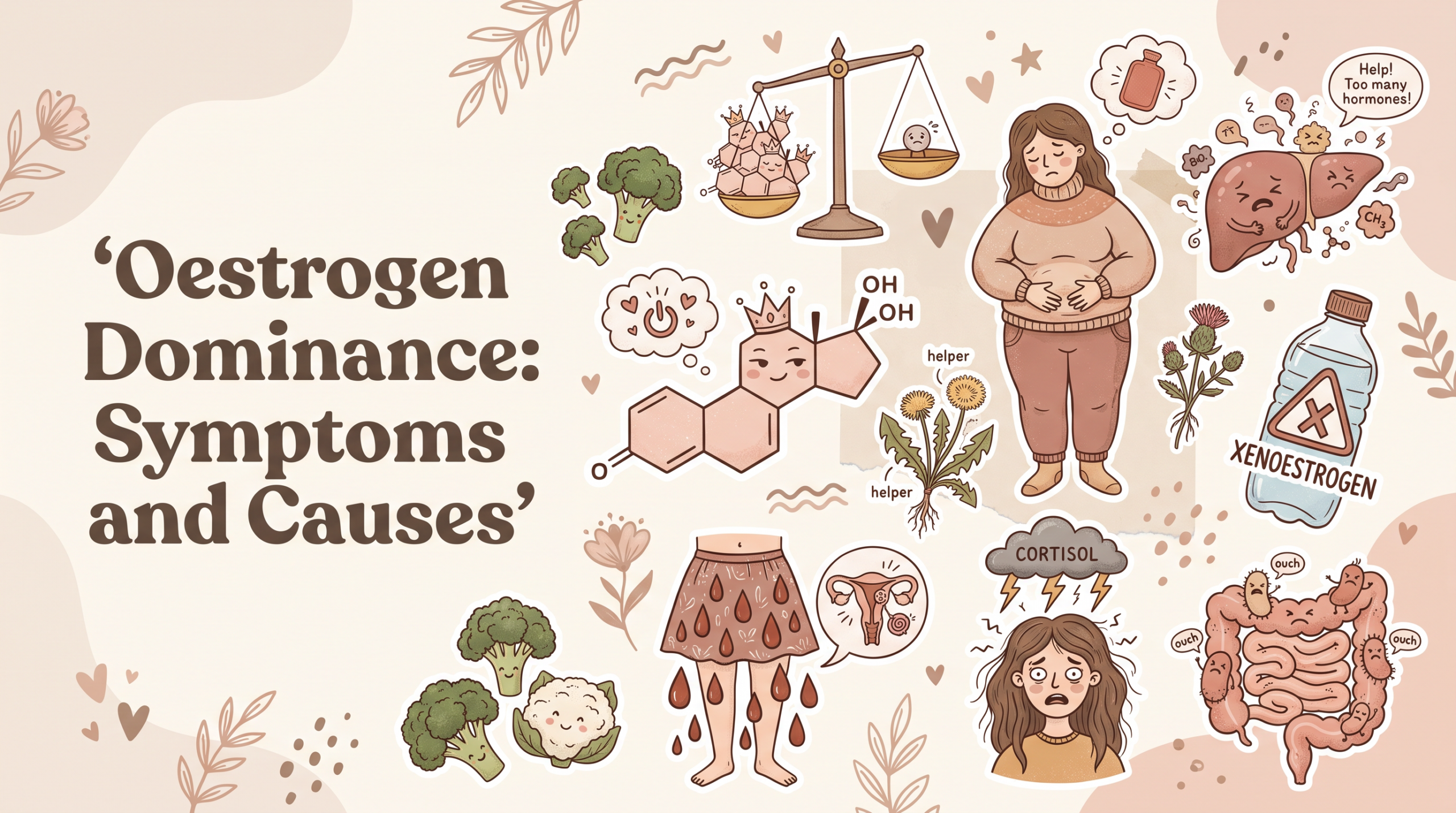
Oestrogen Dominance: Symptoms and Natural Support
When heavy periods, breast tenderness, mood swings, and exhaustion arrive together across your menstrual cycle, it can feel as though your body has changed its rules overnight. Many people search for oestrogen dominance when these symptoms start to crowd everyday life.
This kind of hormonal imbalance and shifting progesterone levels can often trigger perimenopause symptoms that feel overwhelming. While oestrogen dominance can be a useful shorthand, it is not a formal clinical diagnosis with one agreed test. Symptoms can have many causes, so you deserve a clear, evidence-aware route towards relief and better hormone balance rather than dramatic claims about hormones.
Key Takeaways
- Oestrogen dominance is a popular concept rather than a formal clinical diagnosis, as symptoms often overlap with low progesterone, thyroid issues, and perimenopause.
- Tracking your cycle symptoms, including heavy bleeding, mood swings, and breast tenderness, provides vital information for your GP.
- Lifestyle foundations like fibre-rich foods, regular movement, consistent sleep, and moderating alcohol support natural liver metabolism and overall hormone balance.
- Avoid unsupervised supplements or harsh detoxes, and seek medical advice for persistent symptoms, heavy bleeding, or pelvic pain.

Oestrogen Dominance: Symptoms and Natural Cures Explained Clearly
Oestrogen is a group of hormones that affects the menstrual cycle, bones, vaginal tissues, mood and more. Its levels naturally rise and fall across your menstrual cycle. They also change during pregnancy, after birth, throughout perimenopause and after menopause.
People often use oestrogen dominance to mean that oestrogen’s effects feel stronger than progesterone levels, particularly when low progesterone or sluggish oestrogen metabolism affects oestrogen receptors. Sometimes they mean a measured high oestrogen level or a broader hormonal imbalance. Those are different situations, and neither can be confirmed by symptoms alone.
You might notice breast tenderness, bloating, weight gain, heavier or irregular bleeding, headaches, mood swings, poor sleep, or worse perimenopause symptoms. These signs can sometimes stem from anovulatory cycles, uterine fibroids, or other shifts. However, those experiences also overlap with thyroid problems, anaemia, fibroids, perimenopause, stress, pregnancy and medicine side effects.
Hormone health is not a simple scoreboard where lower oestrogen always means better health. Too little oestrogen can cause problems as well. During perimenopause, for example, levels may swing up and down rather than follow a neat, steady decline, which impacts overall hormone balance, how your body handles chronic stress, and discussions about hormone replacement therapy.
A symptom pattern linked to low progesterone can point to a useful conversation with your GP, but it requires a clinical diagnosis to confirm a hormone imbalance on its own.
Online promises of “natural cures” can sound comforting when you feel unwell. In practice, food, sleep, movement and stress support may ease some symptoms and protect your general health. They do not replace assessment or treat every cause of abnormal bleeding.
What may cause oestrogen-related symptoms, and how are they checked?
Your ovaries do not produce the same amount of hormones every month. Ovulation can become less regular in your forties, leading to an increase in anovulatory cycles where progesterone production may change and result in low progesterone. These shifts in progesterone levels often affect bleeding patterns and premenstrual symptoms, while also contributing to perimenopause symptoms and overall hormonal imbalance.
Body fat also produces oestrogen, meaning weight changes can alter hormone activity. Alcohol can affect how your liver metabolism and overall oestrogen metabolism process oestrogen, while liver disease may affect hormone processing. External exposures such as xenoestrogens and other endocrine-disrupting chemicals can further disrupt your system, alongside how well your gut health manages waste products. Some medicines and hormonal contraception can change bleeding, breast tenderness, or mood too.
Yet heavy periods deserve more than an assumption about hormones. Conditions like uterine fibroids, adenomyosis, endometriosis, polyps, thyroid conditions, bleeding disorders, and pregnancy-related problems can all play a part. If you have a uterus, the cause needs to be considered in the context of your age, cycle, and medical history.
A GP will usually ask when symptoms began, how your periods have changed, whether pregnancy is possible, which medicines and supplements you take, and whether relevant conditions run in your family. They may also ask about hot flushes, pelvic pain, weight changes, discharge, bowel symptoms, or fatigue.
Depending on your situation, checks may include:
- A pregnancy test, particularly if bleeding is late, unusual, or accompanied by pain.
- A full blood count to look for anaemia when you have heavy periods.
- Thyroid tests or other targeted blood tests if your history suggests another cause.
- An examination, ultrasound scan, or referral when symptoms point towards a gynaecological condition.
One blood result is only a snapshot. Hormone levels can shift across days of the menstrual cycle, and elevated cortisol levels can further complicate your hormonal picture, meaning a single set of blood tests does not always explain how you feel or provide a definitive clinical diagnosis. Home saliva kits have similar limits and can lead you to spend money chasing a number without proper context regarding oestrogen dominance.
Bring a list of your symptoms and questions to your appointment. Clear details often help more than a broad label.
Natural ways to support hormone health without chasing a quick cure
The most useful habits are usually ordinary ones. They will not reset your hormones in a weekend, but they can give your body steadier conditions and help you notice what worsens symptoms of oestrogen dominance.
Start with regular meals. Skipping breakfast, then reaching for sugary snacks when energy dips, can make fatigue and irritability harder to manage. Aim for meals built around cruciferous vegetables such as broccoli and cabbage, fruit, protein, and high-fibre carbohydrates such as oats, beans, lentils, wholegrain bread, or brown rice. Dietary fibre strongly supports gut health and liver metabolism, which matters because hormones and their by-products leave the body partly through stool. Eating cruciferous vegetables also encourages effective oestrogen metabolism, supporting overall hormone balance, assisting progesterone levels, and counteracting effects linked to low progesterone.
Movement can also help you manage stress, sleep, and mood. Choose something you can repeat, such as a brisk walk, swimming, cycling, Pilates, or strength training twice a week. You do not need punishing workouts. If intense exercise leaves you drained or disrupts your cycle, scale it back and speak to a clinician if the change continues.
Sleep has a practical role here. Keep a reasonably consistent wake-up time, dim lights before bed, and put your phone away when possible. If night sweats, perimenopause symptoms, or insomnia are new, record them, because they can be useful clues during a GP appointment.
Alcohol is worth reviewing without judgement. Try a few alcohol-free weeks if you notice poorer sleep, worse anxiety, or more breast tenderness after drinking. The UK Chief Medical Officers advise that you should not regularly drink more than 14 units a week, spread over three or more days. Reducing alcohol may support your sleep and liver metabolism, but it is not a detox.
Managing chronic stress helps regulate high cortisol levels, which can make cramps, headaches, weight gain, and low mood feel louder, alongside issues like breast tenderness. Minimising daily pressure and reducing exposure to environmental xenoestrogens can help your nervous system settle and ease signs of oestrogen dominance.
Change one habit at a time for two or three cycles. Otherwise, you will not know whether a new supplement, a restrictive diet, or a better bedtime made any difference. Be wary of products that promise to flush or detox oestrogen. Your liver and kidneys already process waste, and aggressive cleanses can cause diarrhoea, dehydration, or interactions with medicines.
Some supplements can affect blood clotting, the liver metabolism, or prescribed treatment, failing to address underlying low progesterone. Even common products such as St John’s wort can interfere with hormonal contraception, while true hormone balance often requires careful clinical oversight rather than guesswork. When lifestyle adjustments are not enough, discussions around bioidentical hormone replacement or standard hormone replacement therapy can be explored with a specialist to manage oestrogen dominance safely. Healthline’s guide to high oestrogen symptoms illustrates how broad these symptoms are, which is another reason to avoid treating yourself on the basis of one symptom alone.
A safe plan for easing symptoms and knowing when to get help
Keep a symptom and cycle diary for two or three months. Record heavy periods, breast tenderness, weight gain, and mood swings throughout your menstrual cycle, noting the first and last day of bleeding, how often you change pads or tampons, clots, pain, sleep, food changes, alcohol, exercise, and any medicines or supplements. A phone note is enough, although a paper calendar can make patterns easier to spot.
Book a GP appointment if symptoms persist, interfere with work or relationships, become worse, or feel unlike your usual cycle. Your treatment will depend on the cause of your hormonal imbalance or perimenopause symptoms. It may include blood tests, treatment for anaemia, pain relief, prescription medicines, contraception, hormone replacement therapy, or bioidentical hormone replacement to restore hormone balance, support progesterone levels, and address signs of oestrogen dominance.
Do not stop prescribed medicines or start addressing low progesterone, hormone replacement therapy, or hormone-related supplements without medical advice. A treatment that helps one person with oestrogen dominance may be unsuitable for you, especially if you have migraine with aura, a history of blood clots, liver disease, or certain cancers, or if you are trying to manage low progesterone or oestrogen dominance independently.
Seek urgent help through NHS 111 if you have very heavy bleeding, severe pelvic pain, possible pregnancy with pain or bleeding, or symptoms of significant anaemia such as breathlessness, fainting, a racing heart, or physical exhaustion linked to chronic stress and high cortisol levels. Go to A&E or call 999 if you collapse, have severe sudden pain, or bleeding is heavy and you feel seriously unwell.
Heavy bleeding is not something you need to endure because you assume it is “just hormones”.

Frequently Asked Questions
What is oestrogen dominance?
Oestrogen dominance is a term often used to describe when oestrogen’s effects feel stronger than progesterone levels, or when hormonal imbalance causes symptoms like heavy periods, mood swings, and breast tenderness. It is not a formal medical diagnosis on its own, and symptoms can stem from several different underlying causes.
Can I test for oestrogen dominance at home?
Home saliva tests and single blood tests only offer a snapshot in time and rarely capture the full picture of your hormone health across a complete menstrual cycle. A GP can provide a proper clinical assessment, taking your medical history, cycle patterns, and overall symptoms into account.
How can I support my hormone balance naturally?
Eating regular meals with plenty of cruciferous vegetables and high-fibre carbohydrates supports your gut health and liver metabolism in processing hormones. Managing stress, prioritising sleep, and keeping alcohol intake within sensible limits also help create a steadier environment for your body.
When should I see a doctor about my symptoms?
You should book a GP appointment if your symptoms persist, interfere with your daily life, or feel unlike your usual cycle. Seek urgent medical help if you experience very heavy bleeding, severe pelvic pain, or symptoms of significant anaemia like breathlessness and fainting.
Finally
Oestrogen dominance is a popular term, but true oestrogen dominance is rarely a straightforward clinical diagnosis. Because its symptoms often overlap with low progesterone and general hormonal imbalance, the safest path is to look for the root cause rather than pursue a quick hormonal fix.
Regular meals, fibre, movement, sleep, stress care, and sensible alcohol choices can support your wellbeing and help maintain steady progesterone levels. Treat these habits as foundation stones for long-term hormone balance rather than guaranteed natural cures.
Track changes across your menstrual cycle and speak to your GP about persistent perimenopause symptoms, heavy bleeding, or signs of oestrogen dominance. With the right explanation and options like hormone replacement therapy or lifestyle adjustments, hormone-related symptoms often become much easier to manage.
Hormonal Health: Signs you have a Hormonal Imbalance
The Ultimate Guide to Eating and Moving for Your Specific Cycle Phase
Somatic Wisdom vs. The 20-Step Routine
The Luteal Phase: Why do I feel like a different person every three weeks?
Energy Crashes: Understanding Your Body’s Signals
Cycle Syncing: Exercising for Your Cycle to Beat PMS Symptoms
4 Types of PCOS Explained, Symptoms and Causes
How to Support Yourself During the Luteal Phase
Hormonal Health Basics for Women: A Guide
Hormonal Wellbeing: Your Hormonal Happiness
Healthy Habits and Your Hormones: How your everyday habits affect your cycle
Why building Somatic Awareness helps your menstrual cycle
Why Your Nervous System Holds the Key to Hormonal Balance
The Luteal Phase: “I know all this but I can’t move”
An ode to ‘feeling wrecked’ right now
Your Hormones aren’t betraying you
Trauma and Your Hormones: Understanding the Silent Connection
Body Literacy: Let’s stop chasing the ‘perfect’ cycle
The Hormone Powerhouse: A love letter to my liver
My Hormones + Hakomi: The 5 simple principles of Hakomi that overhauled my PCOS
From PCOS to PMOS: A Journey in Understanding my Hormonal Health
Data vs. Soul: What My Toxic Hormone Coach Taught Me About Sovereignty

