Menu
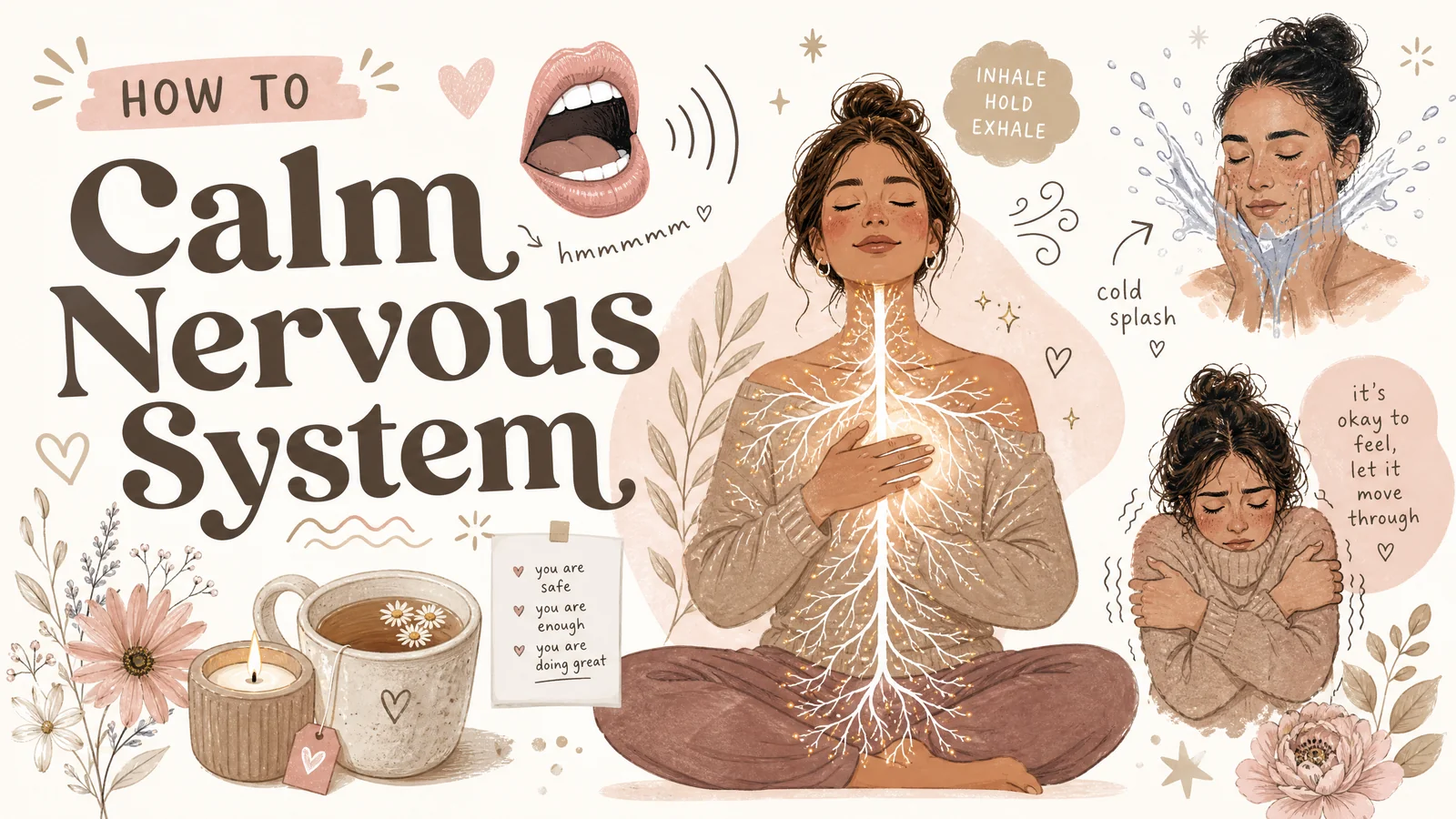
What Is a Calm Nervous System and How Does It Feel?
You can rush through a normal day with your shoulders raised, your thoughts racing and your stomach in knots. Or you can feel steady enough to pause, notice what is happening and choose your next move. A calm nervous system makes that second state more available.
It does not mean you feel cheerful, relaxed or unbothered all the time. Stress is part of being alive, and a healthy body naturally activates a stress response to meet daily challenges. Calm simply means your body can move through those pressures without remaining on high alert or falling into chronic stress long after the moment has passed.
Key Takeaways
- A calm nervous system does not mean feeling relaxed all the time; rather, it is the ability to move through stress and return to a comfortable baseline.
- Signs of a regulated system include even breathing, comfortable heart rate, easier digestion, clearer concentration, and quicker recovery from frustrations.
- Repeated, modest signals of safety – such as longer out-breaths, grounding techniques, and supportive relationships – work better than trying to force relaxation.
- Persistent physical or emotional symptoms require proper medical advice from a GP or qualified mental health professional rather than self-diagnosis.
What is a calm nervous system?
A calm nervous system is a state in which your body feels safe enough to rest, think, connect and respond to everyday demands. You can still feel worried before a meeting, angry during an argument or excited about good news. However, those feelings do not take over every part of your body for hours afterwards.
Your autonomic nervous system manages many processes outside conscious control, including breathing, heart rate and digestion. Its sympathetic nervous system branch prepares you for action, driving a fight or flight response that can speed your heart, sharpen attention and tense your muscles when you face danger or pressure.
When danger is detected by the amygdala, your body shifts into survival mode. Conversely, the parasympathetic nervous system supports rest, digestion and recovery. Within this branch, the vagus nerve acts as a brake to help slow your heart rate and signal safety to the body. Neither response is bad. You need alertness to cross a busy road, meet a deadline or deal with an emergency. The aim is flexibility, meaning your system activates when it needs to, then has a chance to settle.
A calm nervous system does not hold your heart rate or emotions at one fixed level. It helps you return towards a comfortable baseline after a challenge. You may hear this described as relaxed vigilance, a state of being alert without scanning constantly for danger. This short explanation of relaxed vigilance describes the distinction clearly.
Nervous system language can be useful, but it is not a diagnosis. Headaches, fatigue, pain, palpitations and digestive changes may have physical, emotional or situational causes. You deserve proper medical advice rather than a label pulled from social media.
How calm differs from feeling numb or switched off
Exhaustion, numbness and a dysregulated nervous system can look alike from the outside. You might be sitting still, speaking softly or avoiding conflict in all three states. Yet the inner experience often differs.
When you are calm, you usually have some awareness, choice and capacity to connect. You can notice a feeling without being swept away by it. You might rest and still feel able to answer a message, enjoy a meal or make a simple decision.
Numbness or shutdown can bring disconnection, fogginess, low motivation or a sense that you are watching life from a distance. Some people become withdrawn, while others keep functioning on autopilot. Stress responses vary widely, so a checklist cannot tell you exactly what is happening.
How to recognise a regulated nervous system in your body and mind
A settled system often shows up in ordinary moments through effective nervous system regulation. You may breathe more evenly and feel your chest soften. Your heart rate may feel comfortable rather than pounding or fluttering, signaling that your body is at ease. Muscles can be relaxed while you remain awake and ready to act.
You might also notice easier digestion, clearer concentration, and more restorative sleep. Small frustrations still happen, but you can recover quickly and build greater emotional resilience without replaying them for the rest of the evening. Patience returns more easily, and you may take pleasure in simple things, such as warm sunlight through a window or a familiar song.
These signs do not prove perfect health. Illness, medication, hormonal changes, lack of sleep, and demanding life circumstances can all affect how your body feels. Still, ongoing fight, flight, or freeze may involve racing thoughts, dread, irritability, restlessness, stomach upset, poor sleep, or a sense that you cannot switch off.
Regulation is often visible in your recovery time, not in the absence of stress.

Some nervous system exercises focus on breathing, grounding, and muscle release.
Why calm can feel unfamiliar after long-term stress
After prolonged pressure, trauma, grief, or anxiety, quiet can feel uncomfortable. Dealing with chronic stress often means your HPA axis remains on high alert, continually pumping out cortisol and other stress hormones that keep you on edge. A peaceful evening may leave you waiting for bad news, and a slow breath can feel strange if your body has learned to stay braced.
Your system may have become watchful because watchfulness once helped you get through difficult circumstances. That response is not a personal failure, nor is it proof that you are broken. It is a pattern that can change with time, safety, and appropriate support.
If symptoms feel severe, persistent, or frightening, speak with a GP or qualified mental health professional. You do not need to force yourself through discomfort to prove that you are coping.
What helps your nervous system return to calm?
Repeated, modest signals of safety tend to be more useful than trying to make yourself relax on command. You cannot bully a frightened body into peace. Instead, give it small, believable cues that the present moment is manageable to help reset nervous system responses over time.
When tension rises, try this brief sequence:
- Pause and notice what is happening in your body, without judging it.
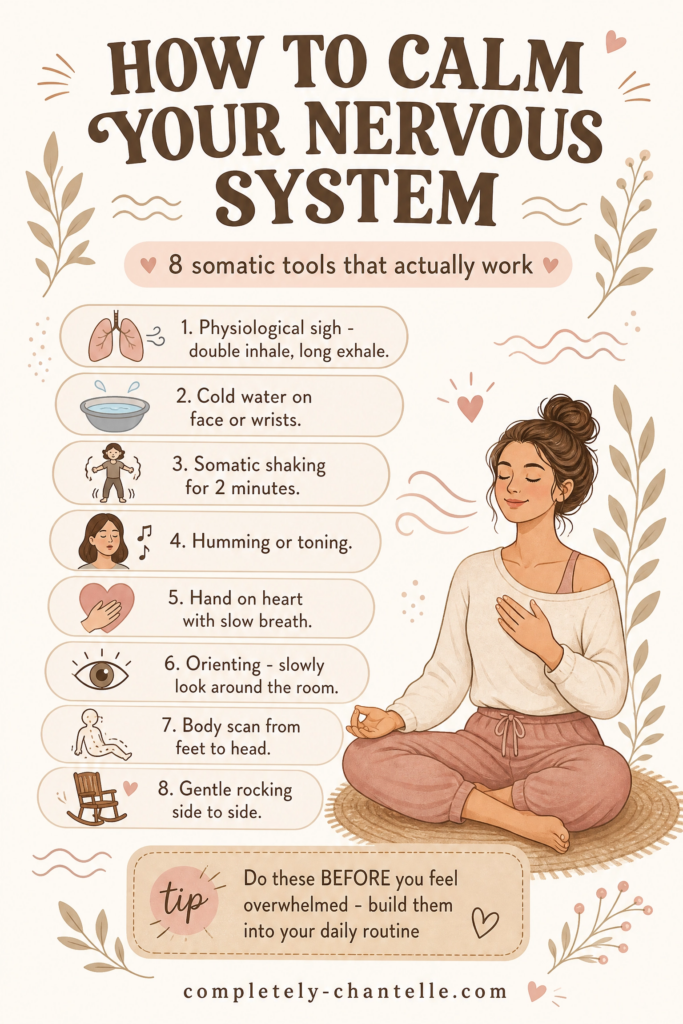
- Let your out-breath become a little longer than your in-breath, without straining, incorporating simple deep breathing or techniques like the physiological sigh to signal safety.
- Unclench your jaw and allow your shoulders to drop.
- Name a few things you can see, hear or feel against your skin, or splash cold water on your face to create an immediate physical shift.
- Choose one manageable next action, such as drinking water, stepping outside or sending one message.
Regular sleep, enough food and water, gentle movement, daylight and time outdoors also give your body a steadier rhythm. Supportive relationships matter too. So do reasonable boundaries around work notifications and late-night scrolling.
Breathing exercises, such as 4-7-8 breathing, and mindfulness are not comfortable for everyone. If closing your eyes or focusing inward makes you feel worse, stop. Open your eyes, look around the room, hold something cool, walk slowly or speak to someone you trust instead. Guidance on nervous system regulation exercises can offer ideas, but your response matters more than following a method perfectly.
Simple daily practices you can try
You do not need an elaborate morning routine. Choose practices that fit the life you already have and repeat them often enough for them to feel familiar.
- Take a slow walk and notice the temperature, colours and sounds around you.
- Drink a warm tea or coffee without checking your phone at the same time.
- Do a few gentle stretches or explore progressive muscle relaxation after sitting for a long period.
- Practice gentle yoga, mindfulness, or a short meditation session if those tools feel supportive to your routine.
- Listen to familiar music that leaves you feeling settled.
- Keep a regular bedtime when you can, even if sleep is imperfect.
- Spend two minutes noticing physical sensations, such as your feet on the floor.
The purpose is not to erase stress. You are practising the shift between activation and recovery, much as you would practise returning your balance after a wobble.
How relationships and your surroundings affect calm
Safety does not come only from techniques you do alone. Through healthy co-regulation, being listened to, having a predictable routine, and spending time with trusted people can help your body lower its guard. A comfortable chair, a quieter room or an uncluttered corner may also make it easier to breathe.
At the same time, housing worries, discrimination, financial strain, caring duties, conflict or an unsafe relationship can keep you alert for good reason. No breathing pattern can solve a problem that needs practical help, protection or wider support.
Where possible, reduce the sources of stress around you. Ask for help with one task, seek financial or housing advice, or tell someone what is going on. You are not failing at self-care if your body responds to a difficult environment.
When nervous system symptoms need more than self-care
Speak with your GP if anxiety, panic, low mood, insomnia, dissociation, pain, palpitations, digestive problems or exhaustion persist or interfere with daily life. Make an appointment too if symptoms appear suddenly or feel different from your usual pattern.
Physical symptoms can have medical causes, so do not automatically put them down to stress. When daily practices are not enough to achieve nervous system regulation, deeper physical responses often require expert insight. Deep-seated brain structures like the hypothalamus govern stress signaling, which explains why professional intervention is sometimes necessary. A GP can discuss possible causes and treatment options, including talking therapy, medication or further assessment where appropriate.

How to measure progress without chasing perfect calm
Look for small changes rather than a permanently tranquil state. You may recover faster after an upsetting conversation, sleep a little better or use a gentle body scan to spot shoulder tension before it becomes a headache. Asking for help sooner also counts as progress.
A short weekly note can help you notice patterns. Write down what settled you, what drained you and one moment when you felt connected or interested. However, stop tracking if constant checking of your heart rate or symptoms makes anxiety worse.
Progress is rarely neat. You may need talking therapy, trauma-informed care, medical assessment or another treatment recommended by a professional. Support can sit alongside your own daily practices.
Frequently Asked Questions
What is a calm nervous system?
A calm nervous system is a state where your body feels safe enough to rest, think, and respond to everyday demands. It allows you to experience stress or worry without those feelings taking over your entire body for hours afterward.
How does calm differ from numbness?
When you are calm, you retain awareness, choice, and the capacity to connect with others or notice feelings without being overwhelmed. Numbness or shutdown typically brings disconnection, fogginess, low motivation, and a sense of watching life from a distance.
Why can calm feel uncomfortable after long-term stress?
After prolonged pressure or trauma, your body may remain on high alert, pumping out stress hormones like cortisol. A peaceful evening can feel unfamiliar or unsafe if your system has learned to stay braced for danger.
What are some quick ways to help the nervous system return to calm?
You can pause and notice your body without judgment, let your out-breath become slightly longer than your in-breath, unclench your jaw, or use grounding techniques like naming things you can see and feel.
A Steadier Place to Return To
Achieving a calm nervous system gives you enough safety to rest, think clearly, connect with others, and recover after stress. You will still have difficult days, but they do not have to define every moment that follows.
Steady routines, gentle body-based practices, supportive people, and practical changes can all help. Persistent symptoms deserve care as well, because calm is easier to build when you are properly supported.
Choose one manageable practice today, then let that small moment of safety count as you build lasting emotional resilience.

Hormonal Health: Signs you have a Hormonal Imbalance
The Ultimate Guide to Eating and Moving for Your Specific Cycle Phase
Somatic Wisdom vs. The 20-Step Routine
The Luteal Phase: Why do I feel like a different person every three weeks?
Energy Crashes: Understanding Your Body’s Signals
Cycle Syncing: Exercising for Your Cycle to Beat PMS Symptoms
4 Types of PCOS Explained, Symptoms and Causes
How to Support Yourself During the Luteal Phase
Hormonal Health Basics for Women: A Guide
Hormonal Wellbeing: Your Hormonal Happiness
Healthy Habits and Your Hormones: How your everyday habits affect your cycle
Why building Somatic Awareness helps your menstrual cycle
Why Your Nervous System Holds the Key to Hormonal Balance
The Luteal Phase: “I know all this but I can’t move”
An ode to ‘feeling wrecked’ right now
Your Hormones aren’t betraying you
Trauma and Your Hormones: Understanding the Silent Connection
Body Literacy: Let’s stop chasing the ‘perfect’ cycle
The Hormone Powerhouse: A love letter to my liver
My Hormones + Hakomi: The 5 simple principles of Hakomi that overhauled my PCOS
From PCOS to PMOS: A Journey in Understanding my Hormonal Health
Data vs. Soul: What My Toxic Hormone Coach Taught Me About Sovereignty

